Author: camilleacey

  • My Takeaways from The Deceleration Assembly

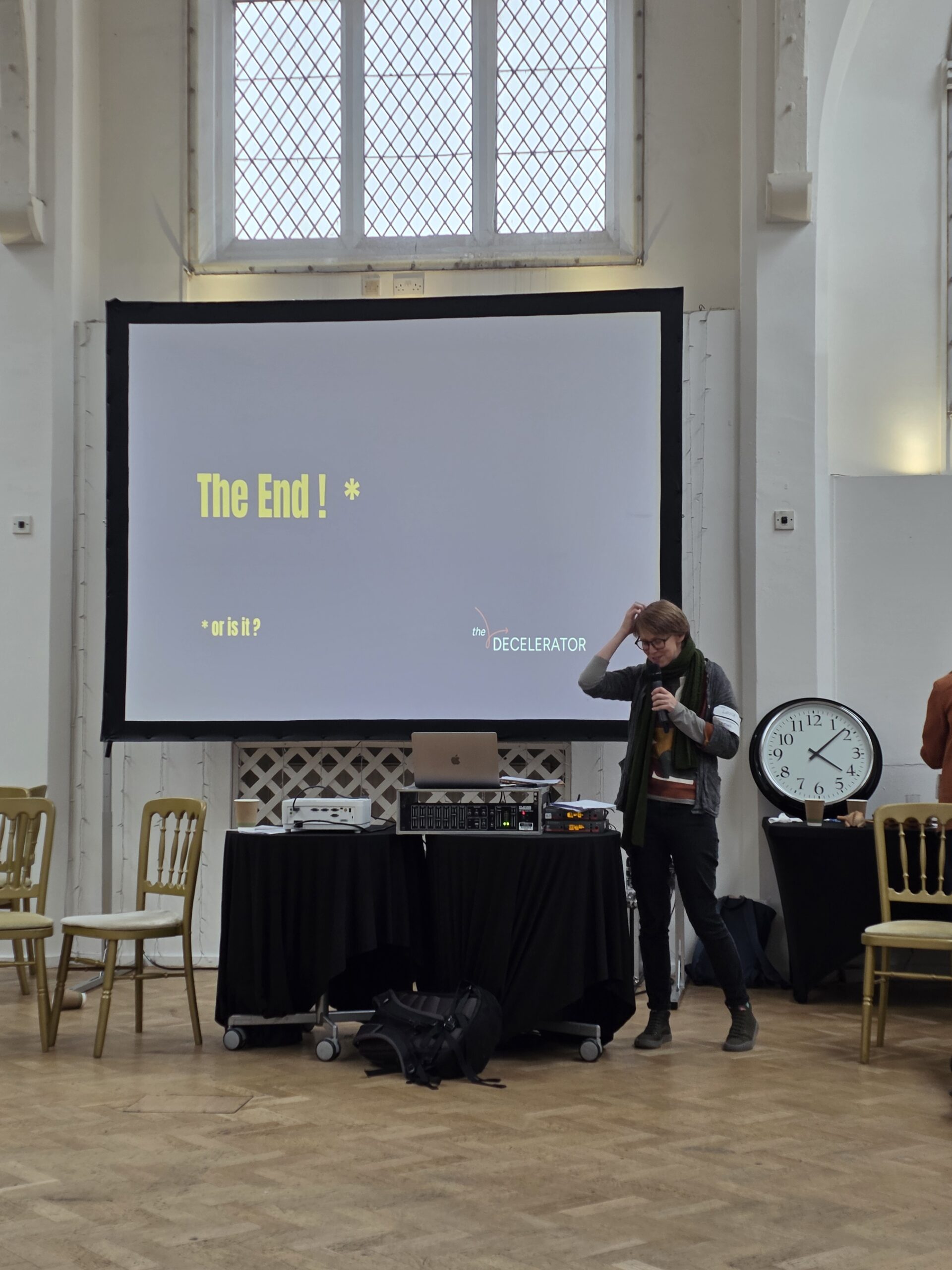
    The Deceleration Assembly

    I am just coming off a rejuvenating and rewarding time in the magical, revitalized industrial hub that is Birmingham, England. I was there for The Deceleration Assembly, the first ever (as far as I know!) gathering of practitioners working on endings and closures in civil society.

    After almost 2 whole years of doing this work full-time, it was amazing to be live and in-person with so many others who also tackle endings and think very deeply about how it could be done better. From the moment I walked into the pre-conference gathering, held at a lovely pizza place in central Birmingham, I knew I was with my people. Conversation flowed, pizza was nibbled, heads nodded, and lots of knowing laughter spilled out.

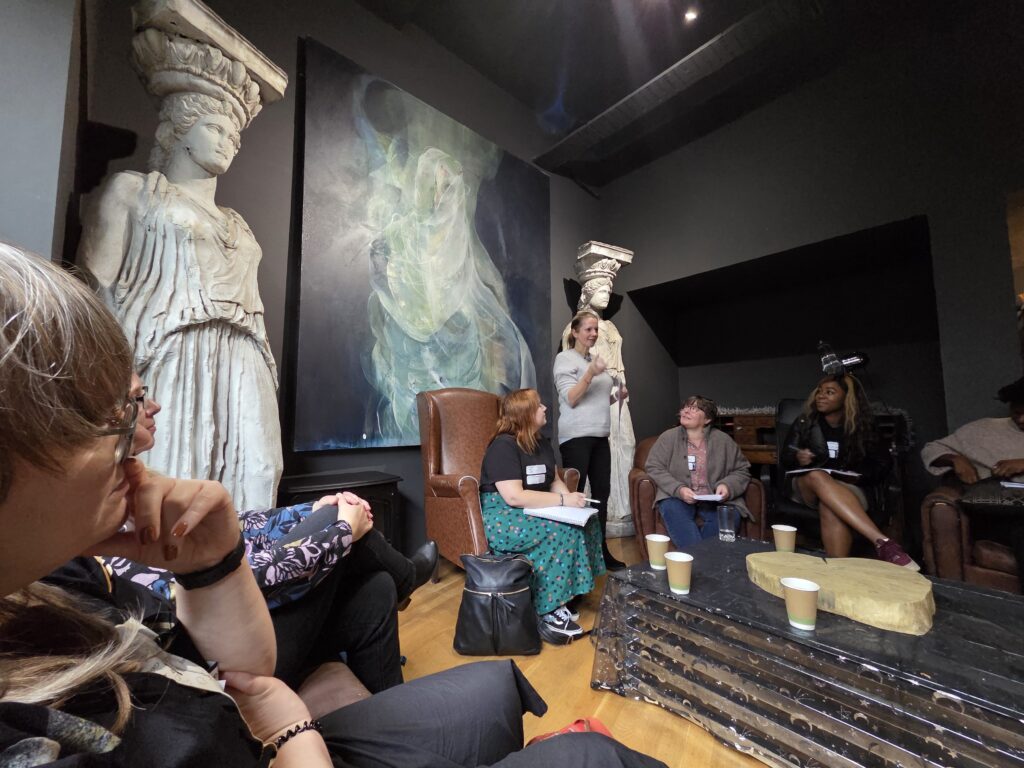
    The conference itself was held in the Old Library, a beautiful (if drafty), refurbished, old building that I imagine used to — per its name — be a library. After some brief icebreakers, we were joined by two marvelous speakers from the adjacent field of grief and funereal care. Then after lunch, we did smaller group sessions focused on themes and tools.

    My brain is still buzzing with what I heard and I am touched with how raw and honest the conversations were, even over some tricky social and cultural divides. However, I’ve boiled my thoughts down into 4 main takeaways:

    Community Building Matters

    I went into this event thinking that I wanted to maybe wind down the community of practice. The work is no longer being funded and sometimes it feels like there is only a trickle of engagement in the Slack or at the gatherings. However, the feeling I got from the assembly is that gathering is so very important, community is so important. People need a place for sharing resources, job opportunities, challenges, and even epiphanies with each other.

    The Decelerator folks have a large reach but I, sadly, don’t see them building community beyond this conference. How can we bridge the gap? I’m trying to nudge them a bit, but I am also open to what else can be done to meet the obvious need. I still do very much called to be a convener and connector in this space. Someone give me the money to keep doing it, please!

    “The feeling I got from the assembly is that gathering is so very important, community is so important. People need a place for sharing resources, job opportunities, challenges, and even epiphanies with each other.”

    Endings – Professional vs. Practice?

    I also came away wondering whether this needs to be consultant work. The lion’s share of the attendees were independent consultants (as am I) and I came away so curious how people were sustaining themselves and whether many of us were just competing over ever-shrinking pots of funding. I also wondered whether coming in as strangers for what should be deeply relational work was the way to approach this.

    Should endings, succession planning, transition management ultimately be skillsets and toolboxes held by operational leaders or should outside specialists be marched or is it a both/and? I fully recognize the valued of shaking up the energy by bringing in the occasional outside facilitator, but should the intimate work of closure be held by such an outside entity? I am not so sure.

    Thriving and Surviving while Ending

    This takeaway is, again, brought to you by my deep concern and suspicion of consultant work. I’m concerned about the sustainability of this work if the people doing it are not well taken care of. I’m feeling it deeply for myself right now, not only financially but also interpersonally. I’d love to have more vulnerable and brave conversations about mutual aid and community care. This can’t just be work people do because they have a spouse with a stable job or have otherwise lucked out financially. Too many valuable voices and talents will be left out if we stay such a narrow group.

    One of the things that struck me so deeply was when grief influencer Amber Jeffrey shared that she felt lonely in her work. This is also real. There is a conversation about coming and staying out of isolation when we are doing such tender work. I know The Decelerator has a supervisor to hold them through their challenges. We need to keep exploring such models.
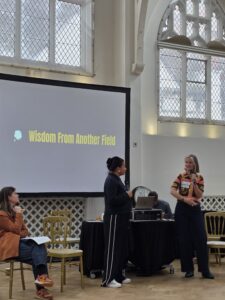
    Amber Jeffrey and Poppy Mardall sharing sage lessons from the grief and death care community
    Amber Jeffrey and Poppy Mardall sharing sage lessons from the grief and death care community

    Rooted in Faith, Spirituality, Culture

    My particular practice is rooted in my own spirituality, my cultural traditions, and other cultural traditions that I try to respectfully adapt to meet the needs of the communities I work with. I came away from the gathering interested in connecting with more people who are interested in or actively elevating the role of ritual in endings.

    Thanks again to The Decelerator Team for organizing a great assembly and big thanks to the city of Birmingham for being so dang charming. I am super smitten!

  • Me! In NonProfit Quarterly!

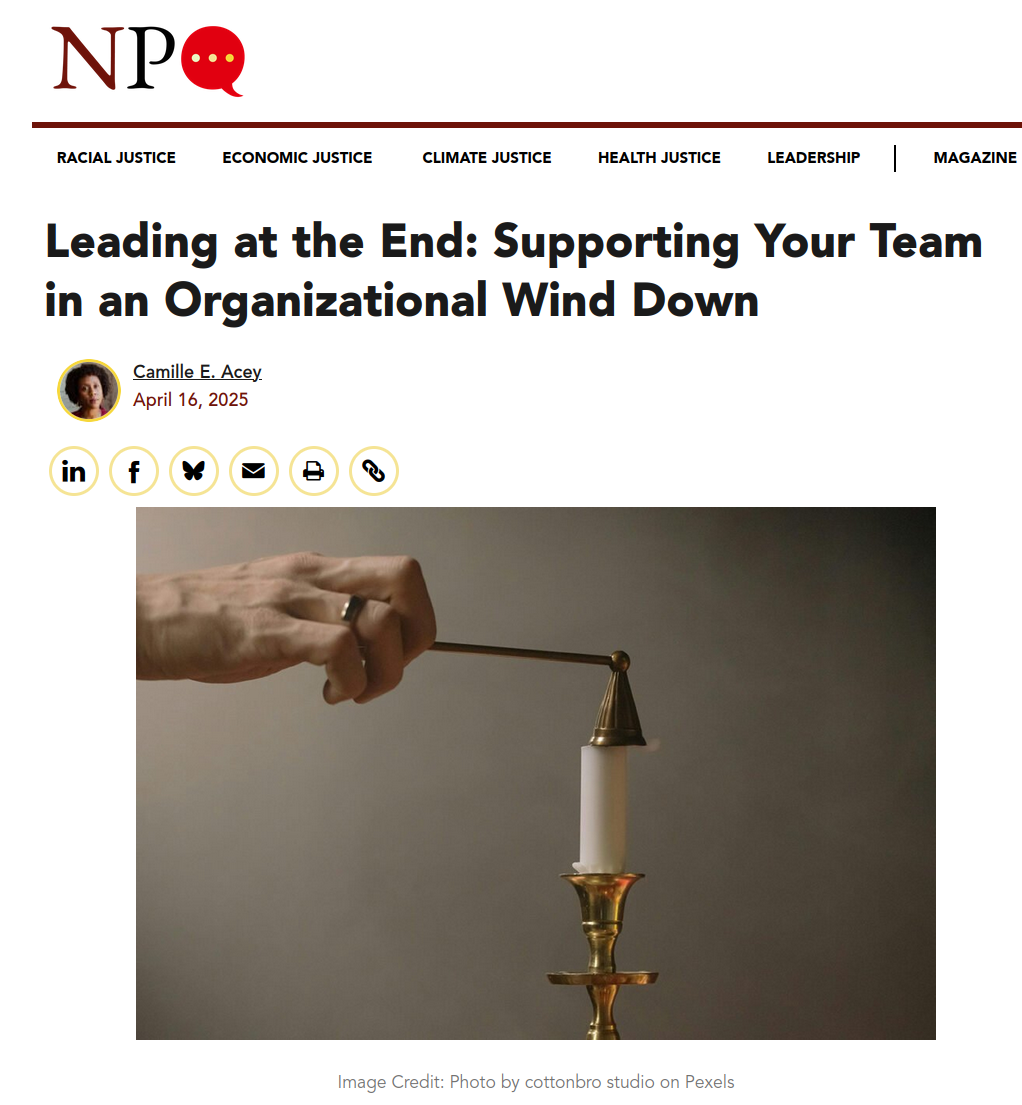
    I have long had ‘Publish a piece in NonProfit Quarterly’ on my bucket list. Even before I started The Wind Down, I felt myself drawn to this fantastic publication and the work of its many editors, and I wanted to be part of the conversation!

    So, it was a great honor when I was contacted by one of its editors — a lovely person, who I happened meet and work with over 25 years ago! — to say a few words about the art, science, and magick of closing things down.

    You can click here to read my article, and I thank you if you do. Lemme know what you think.

    Here’s to dreams coming true!

  • Tending to Endings at Practices for Composting and Hospicing

    Since April 2024, I have been the facilitator of the Practices of Composting and Hospicing community. Next month, we will be joined by the team behind the Tending To Endings card deck, a tool to help groups and individuals design and have better endings. The cards are inspired by concepts from nature and are absolutely beautiful and inspired.

    Curious?

    Join us!

  • How You Made Them Feel OR “Cruelty Over Care In Closure”

    These past few weeks have been rife with the abrupt shuttering of government programs, firings of thousands of government and nonprofit employees, and the long tail. knock-on effect on everyone from aid program employees to dock workers and rural farmers. The topic of endings has been front of mind across the globe, so people have been reaching out to basically say, “Wow, everything is closing! This must be your moment!”

    It is so very much NOT my moment.

    This is basically everything I don’t ever want to see happen. Cruel, callous ejections of people that THE WORLD STILL NEEDS — all while we have more than enough money to keep them working — is nothing like what I prescribe or want to occur.

    Now, don’t get me wrong. I am a person who stands very far to the left — miles away from the left of the left of congressional chambers, and no great fan of the state or representative of representative democracies. But you know what I detest more than any of that? EVIL. My opposition to humans bringing misery to other humans or the planet solely for their financial and political gain (or because they think it is a fun game!) is at the heart of my political convictions and also at the heart of the work I am continuing to develop here at The Wind Down.

    In a previous post, I wrote about what is lost when things close down poorly. Just to recap, that list includes:

    • knowledge loss
    • breakdown of relationships – external and internal
    • reputational damage
    • leaving a service vacuum
    • loss of breadcrumbs/traceability back to the work you did and the people that did it.

    In yet another post, I also wrote about reasons why projects and organizations close. Having to close suddenly usually happens when an organization suddenly runs out of money, finds itself in a dangerous situation such as an actual warzone, or when the/their work finds itself in say a hailstorm of controversy. While the institutions are under attack, I’d say it’s not quite the same as a warzone situation. An artificial warzone has been created, which, ironically, is now endangering the lives and well-being of many people in actual zones of war, disease, and famine and likely contributing to their increase.

    Needless to say, these closures represent the kind that are not prominent on my BINGO card. It is just about the nightmare scenario of total failure and loss, and the consequences are likely to reverberate for years — if not decades — to come.

    “I’ve learned that people will forget what you said, people will forget what you did, but people will never forget how you made them feel.” – Maya Angelou

    So what do I recommend when you are in the absolute worst case closure?

    Well, first of all, let me say that I am IN NO WAY implying that the people in this situation have any responsibility to do anything more, this is just if people are at loose ends and want to explore how to maybe make a splash of lemonade out of lemons. Feel free to do nothing but plot revenge, if you wish. Lord knows these devils deserve it. But for anyone who wants to continue on with me and this thought experiment. Here are a few ideas*:

    SCENARIO 1: THINGS ARE BAD, BUT YOU STILL HAVE YOUR JOB.

    If you can, back up contacts, important (non-proprietary) documents, and start taking some of your desk stuff (if you work onsite) home. Also, I know a lot of people end up using the work computer as the personal computer, but if they demand you give it back you will lose a lot. So, look into getting your own device or backing up bookmarks and whatever else you need to the cloud. Get phone numbers of some of your co-workers and give them yours.

    Ask around for names of labor lawyers now just in case. If you can get a free consult just so you know your rights, take it!

    SCENARIO 2: THINGS ARE BAD, AND YOU’VE BEEN TOLD YOU MAY SOON BE LET GO.

    See above and do everything listed there. Take home EVERYTHING (if you work onsite). Wipe your computer of anything personal NOW.

    SCENARIO 3: YOU’VE BEEN LET GO BUT THE ORGANIZATION IS STILL OPEN

    If you weren’t able to get your physical things, first try to reach out officially to see if they can put your things in the mail. It sucks because they may miss stuff, but it can be better than nothing. If they refuse, you can see about getting a lawyer to write an official letter. If you can, hold off on signing your separation paperwork until you got your property returned.

    As for documents, you might try reaching out to a trusted co-worker via phone, email, or LinkedIn. DO NOT write them on work email. You might jeopardize their job and make things worse for both of you. If that person can safelyget documents to you, they should download and send via a non-email address. Sharing via GDRive or some other work system is NOT THE MOVE.


    SCENARIO 4: YOU’VE BEEN LET GO, EVERYONE WAS LET GO, AND THE WHOLE ORG IS CLOSED.

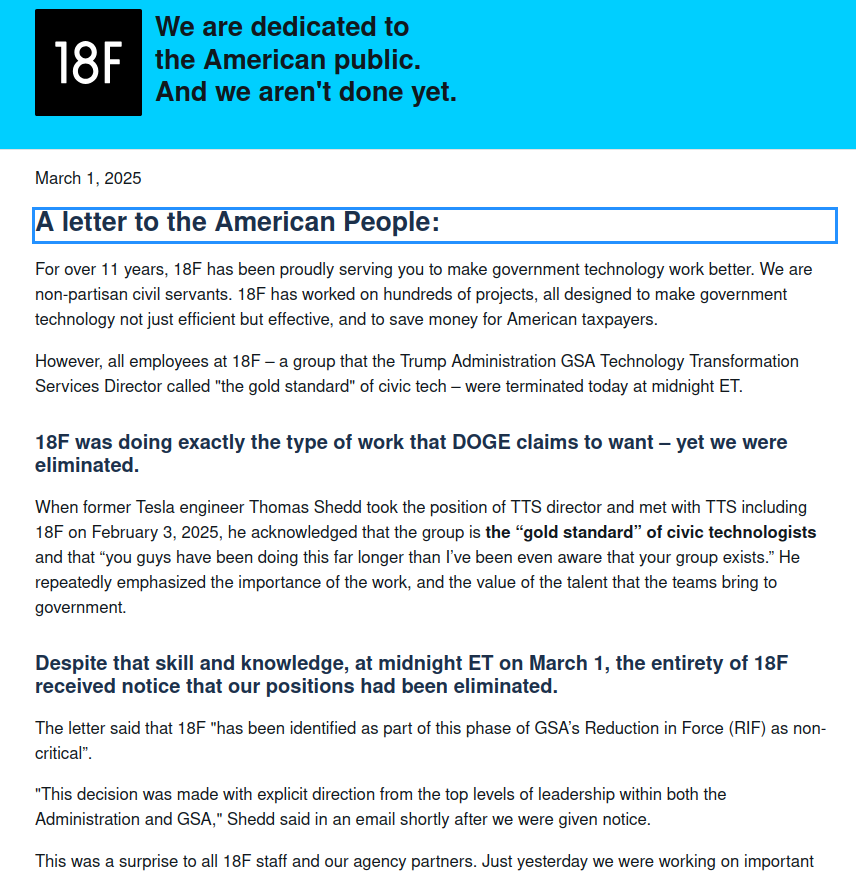
    Find the others and get creative. If there is legal action you can take, take it! I particularly love that the former employees of (now-shuttered) 18F swarmed on a website the day they were fired and had it stood up in under 4 hours.

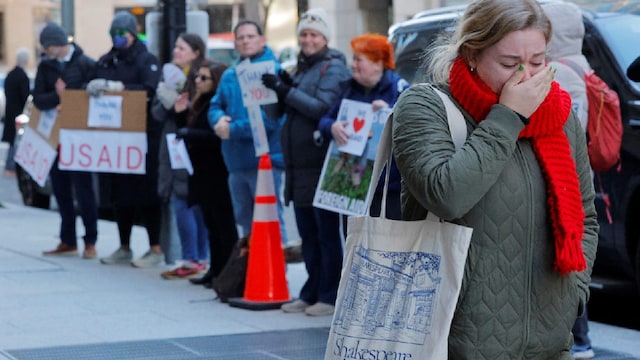
    The other day, I attended a really beautiful, early morning, grief circle hosted by Fearless Project for people that worked with and through USAID. It was valuable for people to just see each other and not feel alone. I heard so much confusion, loss, fear, grief, love, and resilience. People are disappointed and heartbroken, but no one was talking about giving up or going corporate. However, I was moved by how much they still wanna find a way to do the do-goodery stuff that drew them to charity and public service.

    The new 18F website created by former staffers

    What did I miss? What have you seen that has been effective in salvaging a bad ending?? Lemme know in the comments!!

    *GIANT DISCLAIMER: I am not a lawyer. None of this is legal advice. I HIGHLY recommend you get a lawyer if you are in a bad situation in any organization. Lawyers have saved my professional bacon many times, and I can’t suggest enough that you work with them when things get (or even feel!) bad.

  • Me on the Leaving Well Podcast!

    I was honored to speak with my dear pal Naomi Hattaway on her fantastic Leaving Well podcast. It’s relatively short and I hope you will listen! The link is here, and it is available on ALL the places where one can find podcasts.