Category: newsletter

  • Closing Remarks #48: Making Good Use of “Nothing Decades”

    Vladimir Ilyich Lenin is credited to have once said something along the lines of, ‘”There are decades where nothing happens and weeks where decades happen.”

    If that doesn’t resonate with you right now, you aren’t paying attention (and I might be interested in blissfully sailing out to whatever island you are hiding out on). But if you are here and reading, your eyes are probably open and you are WIDE AWAKE and get it. Sometimes life and/or world events come at you fast. When you are lucky or prescient you are ready for it and nimble like a cat. However, other times you are comfortably working away and totally blindsided.

    While none of us can be omniscient, once you’ve lived a bit, it becomes clear that the only constant is change. Why then do we so often build organizations that seem to forget or ignore that? Part of what animates me here at The Wind Down is trying to get across the message that longevity and stability does not always correlate with impact.Sometimes we do need institutions that are strong like oaks, but other times we need structures that flow like water. How can our sturdy structures sustain during those “nothing decades” even as they help us stay alive to those weeks when decades bear down on us? My inbox is open if you’ve got the answer!

    In the meantime, here are the links:

    1) Michigan hunting and fishing group succumbs to the forces

    Just shy of its 90-year anniversary, Michigan United Conservation Clubs has announced they will be closing after failing to secure the full $100,000 it required for basic operating funds. For nearly 100 years, MUCC worked to defend hunting, fishing, trapping and conservation in the state. It consisted of individual members and affiliated clubs that paid dues to fund its work.According to its leadership, their shuttering will leave a void in the state’s conservation space.

    2) Rural Catholic college gives up the ghost

    Since 1946, Anna Maria College has provided a Catholic-centered education to undergrads and graduate students. While it initially opened as a women’s college, in 1973 it went co-ed. The school was best known for having the largest fire science program in the Northeastern area of the United States.

    However, the school’s mounting debt forced the Massachusetts Department of Higher Education to step in and push for the wind down.

    3) Canadian dairy cooperative dealt closure blow

    After being told that the plant was to be expanded, the 90+ employees of New Brunswick’s Agropur dairy plant along with the wider community are reeling at the news that their plant is scheduled to be shut down by 2028. According to reports, the end of this plant will affect not only the workers but the ability of New Brunswick to maintain its food security and independence.

    4) Doors (temporarily) swing shut at museum memorializing “Scotland’s Alcatraz”

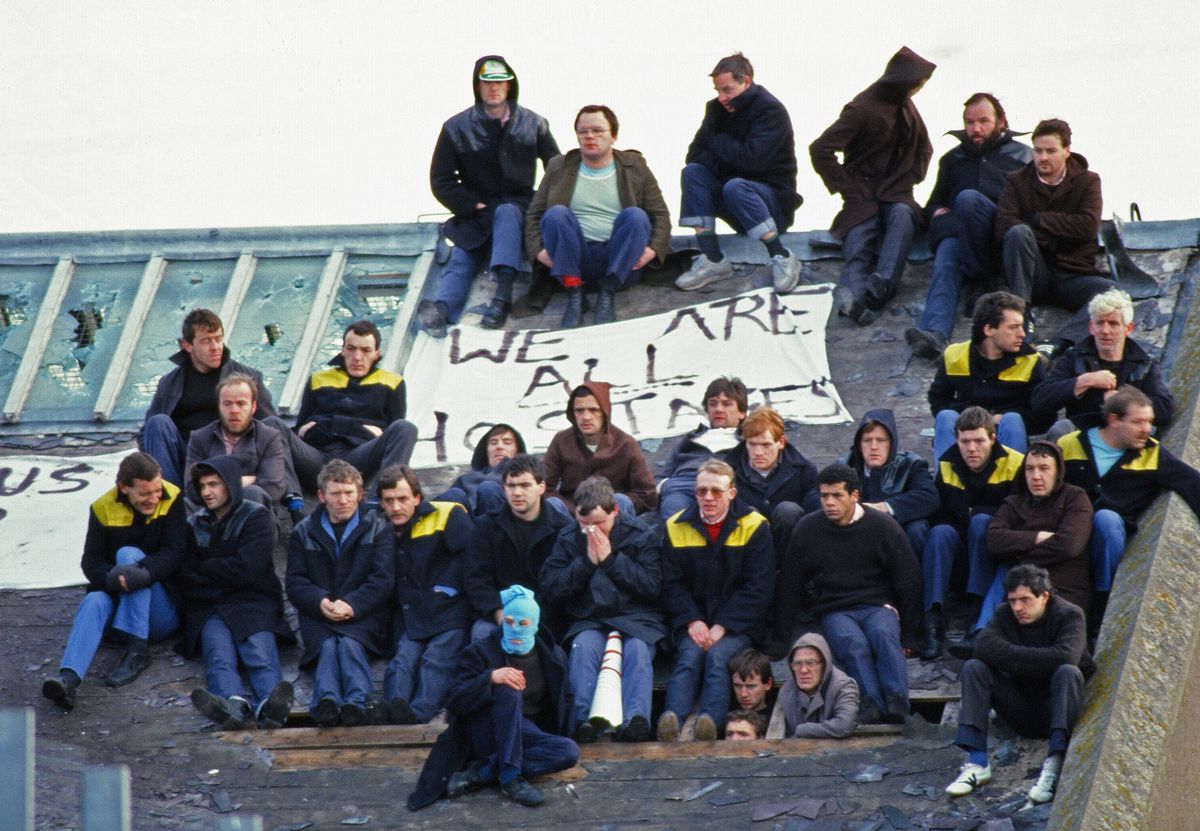
    From 1883 to 2013, Peterhead Prison incarcerated thousands, and was also the site of several notable prison rebellions. Once decommissioned, it re-opened as a tourist attraction. However, new owners Cove Attractions have struggled to make it a big draw, so they are hitting pause to add more to the offering. They plan to open up more areas of the facility to the viewing public and also — because I guess they think it’s not in poor taste — an escape room option. Siiiiigh.

    5) Hampshire College and the Death of a Boomer Utopia

    “…In this unsettled moment, it makes sense that a place like Hampshire lost its relevance. And yet we might need its kind of unruly thinking now more than ever.”

    A NY Mag writer pays tribute to their alma mater and muses on what the closure of the very liberal liberal arts college (also based in Massachusetts) might portend for our society.

    6) “Nobody Told Me That Leaving Would Feel Like This

    “…in this sector, organizational failure and personal failure have become the same thing. When the organization struggles, we struggle. When it stumbles, we stumble. So we do what people do when their identity is on the line? We hold on. We fight. We downsize to a point of almost comedic inefficiency, keeping the lights on with a skeleton crew and a wing and a prayer, because closing means something we cannot stomach. It means we failed. Not the model, not the funding landscape, not the political conditions. Us. Closing gets read as a character flaw, a confession, proof that we were not enough. And so we choose almost anything, almost anything at all, rather than let it end.”

    Dr. Shawn Ginwright is a healing-centered leadership expert. In this piece, he shares how he is working with an ever-increasing number of impact leaders grappling with closures. If anyone needs to hear this today, let me be the first to say: you have done enough, and you are enough. Get some rest.

    UPCOMING EVENTS

  • Closing Remarks #47: Seeds Planted

    Last week, the fantastic artist and writer Molly Crabapple released her new book Here Where We Live Is Our Country. In this riveting tome, she recounts the story of the Jewish Labor Bund, a European socialist organization that ran from the late 1800s thru WWII. The Bund was committed to the full flowering of socialist solidarity alongside a rich Jewish cultural life and exchange, while keeping their feet firmly planted in the countries where they lived rather than embarking on a colonial project in some new far-flung place. The book is fantastic and you should get it if you can (it is on it’s 4th printing AS WE SPEAK!).

    However, I bring this up today not just to shill this amazing book, but to share something beautiful that Molly said about it. In this very thorough interview Molly gave on The Majority Report, she ended by saying,.“Even thought they had lost their country and their families and their milieu — even though they had lost that — they still planted the seeds for their own rediscovery.” A few days later, I saw Molly conversation with Naomi Klein, and in that chat she spoke of how she and other young creative, Jewish, anti-Zionist activists are not just living the legacy of The Bund;rather, she sees them as “not dinosaur fossils” but true comrades.

    What does our work mean if we think of our labors in arcs of centuries rather than fiscal quarters? How can we plant seeds along the way so future comrades can find us, speak with us, cultivate and harvest what we could only dream?

    Here are the links:

    1) Midwest hunger services group closes 80 locations

    For over 20 years, Ruby’s Pantry in (already-beleaguered!) Minnesota provided food and household necessities at 80 sites across the state. These items were distributed to people in need for low and no cost — with no questions asked. The groceries were primarily sourced using corporate donation of surplus and excess items. Rising fuel, insurance, truck repairs, and lease costs crippled the organization and forced the abrupt shutdown.

    2) Alaska’s only LGBTQ+ nonprofit health clinic to close

    Medicaid delays, a rise in rents, and and an increasingly transphobic political climate has forced Identity, Inc to announce that it will cease operations in mid-May. Founded in 1977 as the Alaskan Gay Community Center, Identity later merged with Full Spectrum Health clinic. Its main goal was to empower and advance healthcare for the LGBTQ+ community

    3) Anti-Palestine bullies force closure of Australian anti-abuse foundation

    In 2018, former Australian of the Year Grace Tame founded her charity to raise awareness for and agitate against abuse. As the survivor of childhood abuse, she formed the charity to help reshape national conversations around child safety. However, when Tame became outspoken against Israel’s genocide, she came under rising attacks, forcing the dissolution of her 5 year-old organization.

    4) 25% of US universities facing threat of shutdown

    It’s a crisis whose magnitude has been overshadowed by political and culture-war attacks on higher education and is propelled by the simple law of supply and demand after a long decline in the number of Americans who are going to college.

    “We have too many seats. We have too many classrooms,” Peter Stokes, a managing director at Huron, said of U.S. colleges and universities. “So over the coming five to 10 years, this shakeout is going to take place.”

    NPR news covers the crisis that is befalling so many of America’s centers of higher learning.

    5) Hundreds fired, hundreds more stranded by shelter shutter

    Sunstone Way operated several shelters across the Portland, Oregon area. However, an employee lawsuit and other unnamed business concerns lead to the abrupt announcement that is would be spinning down. In an area that already suffers from notable poverty and street homelessness, the closure also threatens put its 175 employees out of work.

    6) California River charity celebrates decades and departs

    For nearly 50 years, Brenda Adelman worked to raise awareness and advocate for the health of Northern California’s Russian River.through her organization The Russian River Watershed Protection Committee. At age 86, she is retiring, shutting down the organization, and sharing the legacy of her work with newer environmental groups.

    Adelman admits that the end of the organization had much to do with her team, stating, “I have to say that in our older years we have put most of our energy into writing comment letters, going to meetings and studying documents. Our board was not particularly interested in raising money and I was focused on the work and most of the time didn’t get paid.”

    7) Empowering Virginia Arts Org Draws Its Final Breath

    A lynch-pin of the local arts scene, Art 180 became known for its innovative programming and empowerment of Richmond youth through classes, workshops, paid internships and educational programs over the past 27 years. It also operates Atlas, a community arts hub and gallery and has functioned as a creative community space for local kids in need. Six years of “financial strain and shifts in funding” made it increasingly difficult to sustain the group. .

    8) The Last Days of the Longest UK Squat

    St Agnes Place in South London was the site of London’s longest ever running squat as well as the site of the London Rastafarian Community Centre and the Rasta Temple.. It was comprised of a row of 22 Victorian terrace houses and provided shelter for thousands of people between 1969 and 2007. This Huck Magazine article profiles a new book that chronicles the stirring words and images from the last years of the community.

    9) Arts Organizations Don’t Need to Last Forever

    “An organization that existed for fifteen years and changed lives and then ended with intention is a success story with a final chapter. The field needs people willing to write that chapter. It also needs the rest of us to stop treating it as an obituary and start treating it as what it actually is: evidence that the mission was real, the work was done, and the people involved had the courage to let go when it was time.”

    Excellent words by ​Emil J. Kang​ on his Substack, The Reprise. Emil is a cultural strategist and institutional advisor working at the intersection of the arts, philanthropy, education.

    Upcoming Events

  • Closing Remarks #46: Doc, Are We OK?

    MIlford Independent Cinema in Michigan

    I just returned from a beautiful retreat with a team I am supporting through a sunset process. At one point during one of our lively and delicious dinners, one of the team members asked me how their team compared to others I’ve worked with. This is a question I get frequently. I think of it as the “Doc, Am I OK?” question.

    If an organization or project seems like they are struggling, I will name the challenges but I never tell people they are abnormal or bad. I will tell them some of my general rules of thumb:

    • good endings tend to have long runways
    • healthy teams tend to have tearful, loving healthy endings — the process strengthens rather than weakens their bonds
    • every Wind Down is different and unique

    Not only is every organization distinct but every team member has their own feelings about what it means for it to end. As such, I discourage people from trying to rank themselves against any shutdown they’ve seen it the past or even anyone else on their team. While good wind downs are a team sport, they are also an inside job. If you feel good about it, then trust that feeling and share it. It just might be infectious!

    Here are the links:

    1) LGBTQ support organization enters managed wind down

    Formed in the 1980s, London-based Metro is one of the UK’s longest-running LGBTQ+ charities. The group has worked with anyone experiencing issues related to sexuality, identity, gender and diversity to provide support with sexual and reproductive health. More than 60 employees will lose their jobs in the sunset.

    2) Jobs program for disabled wraps up due to discrepancy

    For nearly 75 years, Sunshine Services has advocated for the well-being of adults and children with disabilities in Tennessee. Earlier this year, they announced that they would be ending their vocational training program Sunshine Industries. According to the group, the US Department of Labor reached out to advise them they were out of compliance on wages, and despite their efforts to rectify the issue it proved too late to save the program. They were, however, able to launch a $25,000 transition fund to support the 24 workers who lost their jobs in the affair.

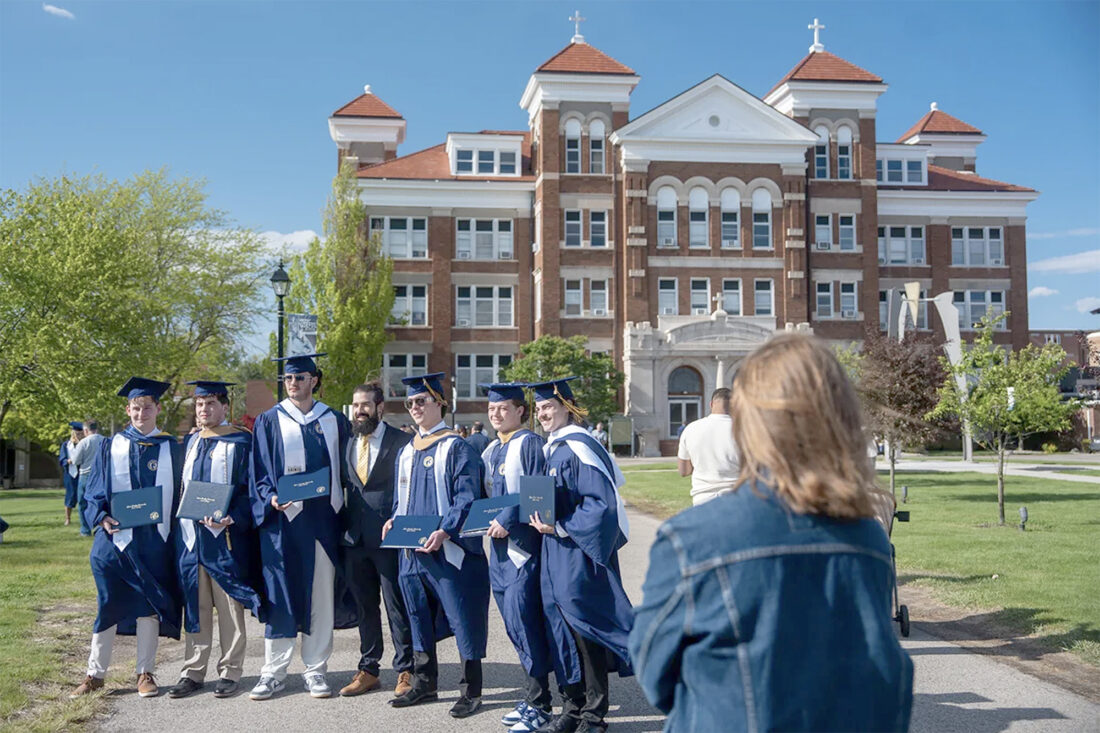
    3) Enrollment plunges, a college falters

    Since the COVID pandemic, the student body at Massachusetts’s Laboure’ College of Healthcare has more than halved, plunging the school into financial peril and ultimately a closure. While the school is going out of business, its nursing program will live on at nearby Curry College. This marks at least the 4th university announcement of the year.

    4) Screen dims at beloved indie film theater

    After 54 years of lifting up Michigan-made independent cinema, the Milford Cinema in Oakland County has shuttered. Despite needing only $70,000 a year to operate, the group attributed the shutdown to financial issues and an overall shift in the industry.

    5) ‘Crisis’: The fallout from Trump’s surprise plan to close Kennedy Center

    “Orchestras are not like buildings. You can’t simply close them down for two years and expect that you can open them up again. They’re living organisms in a way.”

    The Washington Post outlines how the Wrecking Ball Regime continues to blaze its path of misery and destruction. This time with a surprise announcement that critical arts infrastructure is going to be taken offline for (as usual) no good reason.

    6) Closing a Business Responsibly: How to end well

    “A few weeks ago, I published this LinkedIn post announcing that my business partner and I were closing our B Corp certified agency, avery + brown, after 5.5 years. We were still profitable. We still had work coming in (and still do). But the market had shifted, the model wasn’t working the way it once had and, honestly, it just wasn’t fun anymore.”

    Thanks to everyone who tagged me on this great LinkedIn post nut Russ Avery, who reflects on shutting down a profitable B Corp agency. I love that he calls at the lack of fun as a reason. Fun matters!

    7) How Dissolving Your Nonprofit Can Strengthen The Sector

    “Nonprofit organizations need a two-way partnership rooted in transparency, where capacity building support, strategic planning, board development, executive coaching, and legal counsel all provide support to organizations throughout the life cycle and especially during difficult times. It is a partnership from the grant award through the end of the grant period.

    Leaders must be able to speak openly about their experiences. Without honest and transparent communication, more nonprofit organizations will struggle and possibly close. Funders who want to strengthen the field must also be willing to show up after the crisis, not just before it.”

    Traci Lester made the tough decision to sunset her organization, The Opportunity Agenda, last year. Despite a huge grant from Mackenzie Scott, the group still struggled to find sufficient operational funds. She is using her experience to argue for more support and transparency.

    8) Joe Macleod – Warmth of the Setting Sun: Belief and Identity in Digital Life (NEXT Conference)

    “Marketing is the only human made narrative structure where nobody cares about the end”

    A great little talk by my pal Joe Macleod, the king of ENDS.

  • Closing Remarks #45: Beyond Inventory

    It has become cliché to compare various life experiences to dating, be it job hunting, looking for a roommate, picking a real estate agent or whatever. However, the cliché (as clichés do) often falls pretty flat in most situations because there is a clear power imbalance — someone has the power to give or deny you a job you want, a room in an apartment you like, money to fuel a project you want to pursue. Sure, you can ask a few questions and try to sniff out a few red flags but you cant go rifling through files or linen closets doing a top to bottom inspection.

    You’re kinda at their mercy.

    I’ve been thinking about this as more and more ties to philanthropy are revealed in the Epstein email tranches. There is Bill Gates doing (super!)unsavory things but also less bolder faced names thanking each other for charitable contributions and inviting each other to fundraising galas. It all really stinks not only to have proof of our suspicions about these people but also see it spilled in black and white. And what is even worse is the way it might tarnish some of the very worthy causes linked to these unsavory men.

    However, the fact of the matter is we’ve been here all along. The exchange of virtue and fig leaves for funds has under-girded this sector since the beginning. With every drop of documents and files, many pray for a reckoning but a reckoning is just an inventory. It helps to know what’s there. But change comes from shifting and taking power, not just knowing where it lies.

    1) Beloved SF cultural center buckles

    After almost a half-century of lively Latino dance, theater, film, education, and other arts-related programming, San Francisco’s Mission Cultural Center for the Latino Arts has closed. Despite brave attempts to downsize and even closing the space for a time to stabilize things, the group continued to hemorrhage funds and could not hold on. The building, which was already scheduled for retrofitting due to flood damage, has been ceded back to the San Francisco Arts Commission; while their vast collection of political screen prints is being temporarily archived by partners. Meanwhile, the remaining board leaders have vowed to regroup and chart a course forward.

    2) School created as provocation ordered closed

    Riverstone Academy was opened in August 2025 as a rogue attempt to siphon government funds for religious education in Colorado. The school has been embattled since the start with the state threatening to withhold funds and the kooks at Riverstone threatening to sue for religious discrimination (what the actual?).

    Ultimately, the county found that the industrial building where the “school” was located was unable to meet the building, fire, health, or zoning requirements and needed to be vacated. It remains to be seen whether these people try to move the operation elsewhere or online. Ayiyi.

    3) Royal-related charity collapses under controversy

    These days, many of us here in the US are looking across the pond and around the world to the ways they are holding their leaders to account for corruption and collusion (hat tip Brasil! Korea! Norway!). One of the latest to fall is Sarah Ferguson, the former Dutchess of York, who was found to have been communicating with Epstein while he was in prison for child abuse; Ferguson’s charity, Sarah’s Trust, has announced indefinite suspension and her companies have been dissolved. This comes on the heels of Fergie being dropped as a patron or ambassador from a series of charities last year.

    Here’s to actions having consequences, folks!

    4) Youth jails stay open despite long-standing order, brighter future envisioned

    In 2017, then-New Jersey Governor Chris Christie ordered the closure of two youth lockups, the New Jersey Training School in Monroe and the Female Secure Care and Intake Facility in Bordentown. However, seven years later the two buildings remain stubbornly open as they wait for replacement facilities to be constructed.

    Recently, a youth justice working group lead by the state’s outgoing attorney general released a report envisioning how the government might use the sites once they are finally vacated. Their suggestions include a school, vocational and career training, reentry programming, affordable housing, recreational uses, a heritage center that tells the story of the sites, or a New Jersey Center for Peace and Restorative Justice modeled after the Equal Justice Initiative’s Legacy Sites in Montgomery, Alabama, which are part museum and part memorial.

    The group was insistent that the locations should no longer be used for correctional purposes.

    5) Road crash victim support charity slams the brakes

    For over three decades, RoadPeace offered a peer support network for people who’d lost loved ones through crashes and also did advocacy for survivors and road safety. Founded by Brigitte Chaudhry MBE following the death of her son in 1990 and her shock at the casual attitude shown to road casualties and their victims.While the organization’s leadership expressed sadness at the closure due to financial sadness. Many staff members and other stakeholders state they were blindsided by the suddenness and felt like it could have been done with more care.

    6) How To Shut Down A Business

    “When it’s time to unwind, you literally need to take off all of the Legos one by one . . . If you take them off in the wrong order, that can also cause issues.”

    Big thanks to Emily Goligoski for including me in this fantastic article in the Financial Times about the rise in services and service providers for winding down businesses and nonprofits. It was an honor and so cool to discover a few new peers in the space!

    7) How To Close Your Worker Co-Op With Dignity

    Thanks to my comrade, Mike Strode, and the United States Federation of Worker Cooperatives for including me in this guide for worker-run cooperatives facing closure. My roots in activism are in housing and worker cooperatives so this feels like a full-circle moment.

    Yours in the end,
    Camille

  • Closing Remarks #44: Field or Guild?

    After the day wrapped at the Deceleration Assembly last year, I snaked through the chilly but bustling evening streets of beautiful Birmingham, UK with a tight group of colleagues. After hours in deep discussion with other endings practitioners, we were concerned. So many of the fantastic people we met were bright and full of great ideas but they were almost always ever outside consultants, carpetbagging from engagement to engagement. They were making a small impact here and there, but mostly living without the security of a steady paycheck and struggling to effect the field-shifting impact that most of us were hoping for. We wondered to ourselves, “Does closure consultant need to be a job? Is that the way endings should happen?” Despite all doing this work, we weren’t quite sure we should be in the business of field building. We parted ways still chewing on the question.

    A few months later — still chewing — I spoke to one of the friends I’d walked with and confessed to her that I really didn’t think that building an army of closure consultants would be the way to get these ideas and practices embedded into organizations. I’d like to see founders and operations people and compliance teams working on ending things in careful and conscious ways. I’d like people to have more examples of great sunsets and for fewer leaders to have to hang their heads in shame and speak in hushed tones about their struggles to keep their organizations going or their decisions to close.

    But how do we get from here and now to then and there? Well, I think that is gonna take communities of practitioners and thinkers and writers sharing amongst ourselves and also across sectors. Less field building and more guild building. In nature (yes, I know, oof another nature analogy but bear with me!), a guild is “group of species that exploit the same resources, or that exploit different resources in related ways.”
    So by this I mean, instead of building a professional field that we want to see and grow into perpetuity, we focus on the creation and dissemination of practices. While some of us will (like me!) be working independently as consultants, others will come from organizations and foundations, contributing some of their on-the-clock time to build a common language, share resources, define best practices and also to use our collective might to push these ideas forward. The work would be in building the systems and standards and fostering their adoption, rather than trudging from company to company as outsiders merely accompanying bespoke wind downs. It would ultimately be training and enablement work that ensures these ideas are always in the building, in the waters we swim, in the arm we breath.

    But don’t hold me to any of that. I am still chewing.

    Here are this week’s links:

    1) 100 Year-Old UK charity makes it biggest — and perhaps only –impact by closing down

    The National Fund was established in 1928 with £500,000 (£40 million in today’s money) and the intention of helping Great Britain pay off its national debt incurred during World War I. The fund managers continued to collect funds for the cause for another almost 60 years, but no funds were ever paid out! An investigation in 2021 revealed the existence of this strange horde, and this year the government was finally able to get the group to hand over the money — which had grown to over £600 million — to the national treasury – and finally fulfill its original purpose.

    2) As a nursery goes, a garden grows

    After 45 years of business, Shades of Green plant nursery in San Antonio, Texas is going out of business. However, as it winds down, it is ceding the land to a non-profit to be turned into permanent green space for the community, a sprawling metropolis that is increasingly short on gardens and parks.

    3) Woman voter group wanes

    Since its founding in 2019, Supermajority has worked to rally American female voters around Democratic candidates. Despite big name founders like BLM’s Alicia Garza and Cecile Richards, the late former president of Planned Parenthood, a shift in political winds has forced the group to disband. The group is laying off 22 staff members and sending their community in the direction of more grassroots-based efforts.

    4) New podcast alert! Good Bye The Myriad Series

    Join friends of the newsletter, Alison Lucas and Lizzie Bentley, as they expand on the themes from the best-selling 2025 book Good Bye. Every episode they focus on a specific ending and the challenges and opportunities that come with it. (listen here!)

    5) Strike delivers a heavy sentence for PA newspaper

    The Pulitzer Prize–winning newspaper Pittsburgh Post-Gazette descends from the Pittsburgh Gazette that was established in 1786 as the first newspaper published west of the Allegheny Mountains. The paper formed under its present title in 1927 from the consolidation of the Pittsburgh Gazette Times and The Pittsburgh Post. In 2022, staff walked out of the newsroom and held strong in a strike until late 2025, when they emerged seemingly victorious from the longest strike in US newspaper history as well as the longest employee strike ever in Pittsburgh.

    However, the celebrations were short-lived. Just as few weeks after the newsroom spun back up, PG’s (Pro-Trump) owners Block Communications announced that they were putting the paper out of business. While owners claim the decision was due to financial losses, this Drop Site article paints a more complicated picture.

    6) Long-running California arts college bids a mournful goodbye

    The California College of the Arts, Northern California’s last-remaining nonprofit arts school, has announced that the 2026-2027 academic year will be its last. After over a century of operations, the school’s leadership have found themselves in too much of a hole to paint a new picture for the failing institution.

    When they depart the campus, the space will be taken over by Nashville-based Vanderbilt University.

    7) Cyber breach brings down a housing group

    In announcing that they were folding, Vermont’s Randolph Area Community Development Corporation stated an all too familiar cause — a significant decline in federal funds. However, a deeper dive revealed that part of their woes stemmed from a major cyber-financial crime. When scammers infiltrated RACDC’s email system through a phishing attack, exploiting vulnerabilities in their Microsoft’s cloud infrastructure, the organization not only lost hundreds of thousands of dollars, they also lost the confidence of their donors.

    Yours in the end,
    Camille