Author: camilleacey

  • Closing Remarks #43: On Being The Light

    Do we owe endings solemnity?

    Recently a friend recounted to me the story of going to see a relative who was in end of life care. My friend and her partner arrived to the facility, unintentionally dressed in bright colors. Bounding into their relative’s hospital room, they regaled the patient with stories of a joyous recent trip. At a certain point they caught themselves, wondering whether the way they were dressed, acting, speaking was inappropriate. They wondered,“Do we owe this moment solemnity? Are we defiling this moment with our joy and laughter?”

    As the two visitors walked out of the room for what would sadly be the last time, the nurses beckoned the two to the nurses’ station. It turns out they wanted to thank the friends for coming and bringing an energy and levity that was very often missing in what was, of course, a very somber place. Though some lives were nearing the end, the two energetic visitors’ light was shining into the situation — bringing joy to those whose lives would keep going on.

    This isn’t to say there isn’t a respect and seriousness that we need to bring to endings — there certainly should be! However, when we have the time to end with care, there should always be room for levity, humor, and light.

    May you have a little of all of it in the coming year!

    1) Community-run bookstore closes its own books
    Malvern Book Cooperative was established in 2012 when patrons of the St. Ann’s bookstore in Malvern (Worcestshire, UK) came together to save the town’s only bookstore from going out of business. However, after 14 years, the group felt it was time to wrap things up. Though the store will close in March, the group promises to continue to support community literacy events and festivals in and around the town.

    2) Bitter pill for beloved Chinese Pharmacy in Manila
    Lui Chuon was opened in Manila’s Binondo District in 1951 by Chinese immigrant Ng Tong. For years it retained its family ownership and old-world charm as the neighborhood around it grew and modernised. However, deaths, retirements, and disinterest from the new generation forced the decision to close.

    The family is now in discussions to donate some of their old relics to a neighborhood museum. (BTW, the pictures in the article really make it worth the click!)

    3) Former inmate buys closed North Carolina prison, plans to convert to rehabilitation center
    While we’ve all heard the old chestnut about the “inmates running the asylum”, in this case we’ve got a formerly incarcerated businessman, one Kerwin Pittman, who has purchased the decommissioned Wayne Correctional facility. Pittman was locked up in this very system, and he is repurposing this prison in order to support other folks transitioning back into civilian life. The site is about 19 acres and sits across the street from the Neuse Correctional Institution.

    I don’t know how this will go, but the model is intriguing and I wish them a lot of success!

    4) Indigenous education nonprofit wins bid for shuttered university
    When the trustees of New York’s Wells College voted to shut down the school after nearly 160 years, it set off a fierce bidding war for new owners of the sprawling campus. Early this year, it was announced that the deed had been sold to The Hiawatha Institute for Indigenous Knowledge (HIIK). HIIK is an educational entity established in 2011. Its mission is to create a fully accredited university which is dedicated to the preservation and promotion of Native technologies, sciences, languages and arts of the Nation’s first peoples.

    HIIK has an ambitious plan to bring economic revitalization, vibrant community space, and affordable housing to the land, which will be held as a community trust, along with the establishment of the new university.

    5) Portland loses beloved paint recycling depot
    For over 30 years. MetroPaint provided the people of Portland, Oregon with a place to safely dispose of old paint and also buy recycled paint — sometimes in exciting new colors! However, the rollout of a statewide paint recycling initiative meant that Metro was no longer necessary.

    6) Civic tech incubator changes form
    Since 2018, CivStart has promoted government tech enablement and the growth of startups developing tools for local governments. In December, the board determined that retaining their 501(c)3 status was no longer in support of their mission. The group will spend the next few months winding down the non-profit and pulling resources into their for-profit Civic Ventures platform.

    7) ARTICLE: Do you know where your exits are?: Why responsible charities are always thinking about closure
    “Planning for closure does not weaken a charity’s commitment to its purpose. It strengthens it. It recognises that impact is not only about how an organisation grows, but also about how it ends. A charity that closes well protects people, preserves trust, and honours the work already done. Journeys end whether we plan for them or not. The question is whether charities choose their exits, or pretend they do not exist until the road runs out.”

    Great LinkedIn article
    by two charity sector professionals in the UK who I hadn’t heard about until a good pal tagged me on their post. Thanks, good pal! It is always so cool to find The Others.
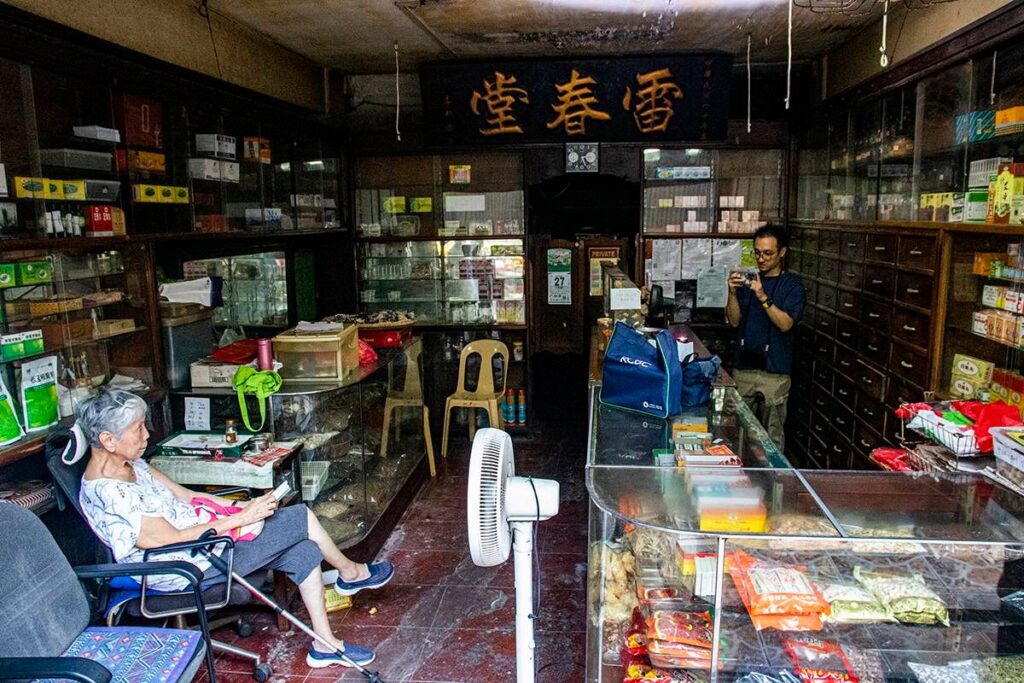
    Lui Chon was also a chill place to hang in the neighborhood.
  • Careening Through Year Two

    My word, how is it 2026 already? It feels like just yesterday, I was a little babe in the woods pestering everyone I know about whether there was someone — anyone — out there thinking about how to do endings well in civil society. And here we are, two years into this project and every morning I wake up and the response keeps being, “The work is still on you, boo, it’s on YOU!”

    Fortunately this past year was another amazing one of continuing to find the scattered others out there who are working on wind downs, sharing about shutterings, and seeking out sponsors for sunsets. So I wanted to take a second to capture a brief rundown of The Wind Down’s second year of operations — the highlights, the low points, and what is on the horizon for this bright year 3 of its life.

    The Bright Spots

    The People

    As mentioned, I met so many fantastic people this last year. Between hosting the monthly community sessions and attending the fantastic Deceleration Assembly, I met and got to deepen relationships with so many fantastic people who incepted new ideas into my gray matter and pointed me in cool new directions or even just went along with me on wild goose chases and flights of fancy (I am looking at you, Tess!).

    Some of the folks I am most grateful for are all the fantastic folks in the Slack community, Jessica Meyerson at Educopia, Katya Fels Smyth (who fearlessly shuttered Full Frame Initiative this year), Naomi Hattaway, and the intrepid Kate Harris, Nonprofit Merger Mistress Supreme, who saw my museum and decided to close hers. If you’re looking at this and thinking I should have named you here…I did! It is in *invisible ink*. Yup.

    I am also grateful for the leaders who contacted the hotline or worked with me on longer engagements,shared so openly. and insisted that I (finally!) start charging for this work. I wasn’t sure when the time would be right, but folks just told me. They were like, “We are giving you money, and you can’t stop us.” Thank you for helping me put a dollar (or pound or euro!) amount on this work.

    The Places

    In 2025, I was able to take my work and ideas to the streets. In June, I was honored to sit on a panel for the great Women’s Leadership Council. In September, I facilitated a session at The Sidebar event that the Skoll Foundation supports on the sidelines of the United Nations General Assembly.

    Then in October, I hopped across the ocean to Birmingham, UK for The Deceleration Assembly hosted by our UK frenz at The Decelerator. I was stoked that my good (above-mentioned) pal Katya was there too. It was way too short but marvelous (my full review is here). I love being out and about amongst the people!

    The Things

    When I started working on The Wind Down, I jotted down a dream list of publications I would love to write for or be written about in: Stanford Social Innovation Review, Devex, and Nonprofit Quarterly. This year, I was in ALL THREE! What a thrill. I was even mentioned in Chronicle of Philanthropy. Look at me, ma, I;m in the papers!

    Last year, I invested in my tech stack, upping my game to use bespoke tools like Harvest (for invoicing and time tracking), Bigin (for tracking opportunities), and also moving over to Mailpoet for my newsletter. I also totally overhauled this here website. Hat tip to the great Joshua Christman for the website and the snazzy logo and the unwavering friendship and support (hire this man, y’all!)

    The Hard Knocks

    The Money

    This was probably one of the toughest years for me, financially. I just didn’t make much money on this and this was pretty much all I worked on last year. I had hoped my engagement with Joseph Rowntree Foundation would grow into something more fruitful, but they cut me and the Community of Practice project they were supporting off in February. It was a hard pill to swallow, but I soldiered on.

    Previous to this project, I spent more than a decade in tech where salaries and benefits and snacks (!) are a-flowin. The precarity in the social sector has been hard to wrap my mind around and I refuse to get used to it.However, I did have to accept it last year and do my best to live a full life on my savings and resourcefulness.

    The Supportive Community

    In 2024, the launch of TWD was coupled with the launch of another group called the IMMA Collective, an organization founded to give social impact solopreneurs a sense of community, support, and accountability. Being a part of IMMA gave me colleagues, cheerleaders, and people to share resources with and bounce ideas off of. Unfortunately, in April of 2025, I hit a wall with the group and couldn’t work things out. I stand by my decision to leave, but I also ache for the community I lost. I am a member of many groups, but none of them have (so far) filled the hole that IMMA left in my days and my heart.

    Hopes For Year Three

    I took my lumps this last year but also had some solid wins to build on. Moving into this new year, I am already entertaining some interesting opportunities.

    • Speaking – I have two speaking slots already, but I did have to turn another cool looking one down because they didn’t offer much in the way of travel support. Like I said, I love the peoples and the streets, so I will be out amongst them one way or another
    • Writing – I hope to post more here on this blog and also continue writing for civil society publications (and even publications not in this sector!). In a move that hearkens back to my punk rock youth, I am exploring doing some zines with a friend. I look forward to sharing those with you and leaving them at conferences and libraries and stuff!

      Hit me up if you wanna do in-person or virtual writing sessions. I need accountability partners!
    • Video – I started experimenting with video last year and still really believe the format has potential for spreading the word I am hoping to mess around with shorter form, especially if I can find some open source/non-algo-driven platforms to post them to.
    • Get paid or grow increasingly exasperated trying – Nothing more to really say here. I am gonna keep putting myself out there both for closures work and also non-closures paying work.

    What about you? How did it all turn out last year? What are you up to this year? I wanna know!

  • Closing Remarks #42: The Case of The Abandoned Mansion

    An abandoned old mansion

    Hi Friends!

    The other day I was talking to a friend about an organization that she had heard closed. We both stopped and looked at their website. It very much looked like the website of a going concern. It had a donate button and a mailing list signup and pictures from fairly recent events.

    Sliding over to the LinkedIn pages of some of the org’s leadership, they all seemed to be still working there. However, my friend said she had it on good authority that they had been closed for a little while now. This sort of thing happens to me not infrequently while writing this newsletter. I get a HOT TIP about a sunsetted org and I go trekking around the interwebs looking for confirmation that is indeed shut down, only to find no concrete proof of this allegation. It is like a house with all the lights on and a clean car parked in the driveway, but I can’t quite tell . I don’t usually go so far as to reach out. I have enough to write about here (and on the Museum of Closed NGOs page) that I don’t need to all go ringing doorbells to get any kind of “scoop”.

    That said, these situations do always get my mind spinning on the question of whose responsibility (if anyone’s!) it is or should be to flag that these are no longer operational My friend and I started chatting about beloved nonprofit sector gadfly Vu Le’s blogpost on “zombie missions”. Vu describes a zombie mission in this way

    These orgs have missions that were once vital, but as needs change, or as other organizations overtake them in effectiveness, , they find themselves in denial..They become ‘zombie missions’. This usually leads to a lack of direction and purpose, perpetual morale issues, and constant staff turnover.

    Vu Le, “Zombie Missions:Organizations that should close but won’t”

    While these zombies are undoubtedly a problem, what I am lamenting here is less the orgs that stumble along half-dead than the orgs that know they are dead and never bother to let anyone else know in a clear way. What to call those that go off quietly into the night never to be heard of or from again? For now, all I can see in my mind is that persistent image of the house —likely still full of useful things — that slowly and mysteriously becomes a needlessly rundown mess.

    Here are this week’s links:

    1) New Jersey hospital flatlines
    After a failed emergency appeal to the state for funding, Jersey City’s Heights University Hospital was shuttered by its parent organization, Hudson Regional Hospital. According to the local union, the abrupt closing was in violation of local regulations and left around 120 medical employees scrambling to find roles in other hospitals in the parent system or seek employment elsewhere. Meanwhile, HRH is exploring alternative uses for the 150 year-old facility.

    2) LGBTQ center closes, dodgeball season in jeopardy
    The Fieldhouse at Studio West 117 was a pricey and ambitious effort to build an LGBTQ+ hub in Cleveland, Ohio. While no explanation was given for its shuttering after only three years, reports indicate conflict between the board and staff. Stonewall Sports Cleveland, a local LGBTQ+ nonprofit sports organization, which was one of many housed in the facility, is now frantically searching for a new space for the January 18th opening game of the gay dodgeball league.

    3) Pro-Israel LGBTQ group blows up

    For 15 years, A Wider Bridge attempted to fight antisemitism and connect queer Jews in the US with their peers in Israel, helping to promote a narrative of Israeli’s respect for human rights by way of a tolerance for its LGBTQ community. However, growing accusations of pinkwashing coupled with sexual misconduct charges against the group’s executive director, lead to increasing exclusion from US LGBTQIA+ coalitions and gatherings.

    Decreased funding was the main reason cited for the wind down. Their last day of operations will be December 31, 2025.

    4) Social isolation charity waves goodbye

    Vermont’s Social Tinkering was established in 2021 in the midst of the pandemic, in response to a growing epidemic of social isolation. While it has now marked its last gathering, it is celebrated for the number of initiatives it was able to launch in just a few short years. Their projects include many in-person meetups, an LGBTQ+ welcome campaign, nearly $200,000 in health equity grants awarded, and extensive public community programming.

    5) After 150 Years, California’s Sugar Beet Industry Comes to an End

    Policy wasn’t the only reason for the closing plants. In California, higher-value crops also displaced beets. For many years, while federal policy kept sugar at a relatively fixed price, the price for other crops kept rising—especially nuts.

    “That was a big surprise to a lot of people, how quickly almonds and pistachios expanded,” said Kaffka. “It was like printing money.”

    A great, longish read in Civil Eats explaining the how and why of the decimation of the Imperial Valley’s sugar beet industry. The loss of this critical contributor to California’s agricultural sector has had wide reaching implications for the surrounding communities, such that politicians and activists are still exploring how to fill the gap.

    6) The Colleges That Couldn’t Survive 2025

    At least 15 nonprofit institutions announced closures amid a difficult year for higher education as the sector navigated rising operating costs and political minefields amid a presidential transition.

    That number is down from last year when Inside Higher Ed tracked 16 closure announcements but up from 2023…

    Anyone who’s been hanging around these parts for a while won’t be too surprised to see this headline or this list from the journal Inside Higher Ed. 2025 was another rough year for institutions of higher learning, and this doesn’t even include the individual programs and centers that sadly came on the chopping block. Sadly 2026 is already shaping up to be another hot mess.

    UPCOMING EVENTS 

    Jan 26, 2026,  12-2pm EST
    Loss of Primary Source of Funding: A 4 Session Workshop Series by Educopia (register)
    Facing major funding loss? Get tools, frameworks, exercises, and peer learning to make strategic, thoughtful decisions for your organization

    Yours in the end,

    Camille

  • My Takeaways from The Deceleration Assembly

    The Deceleration Assembly

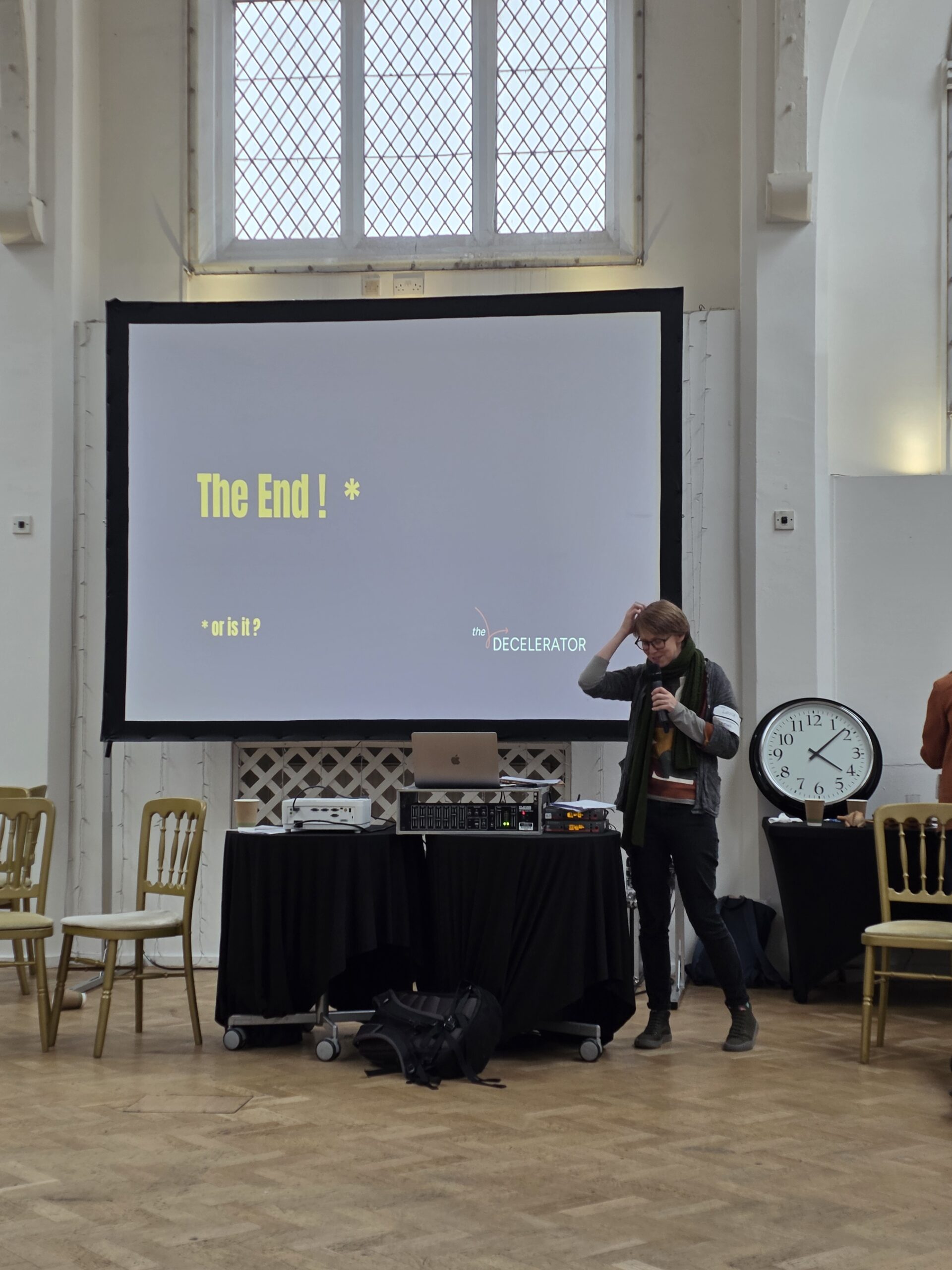
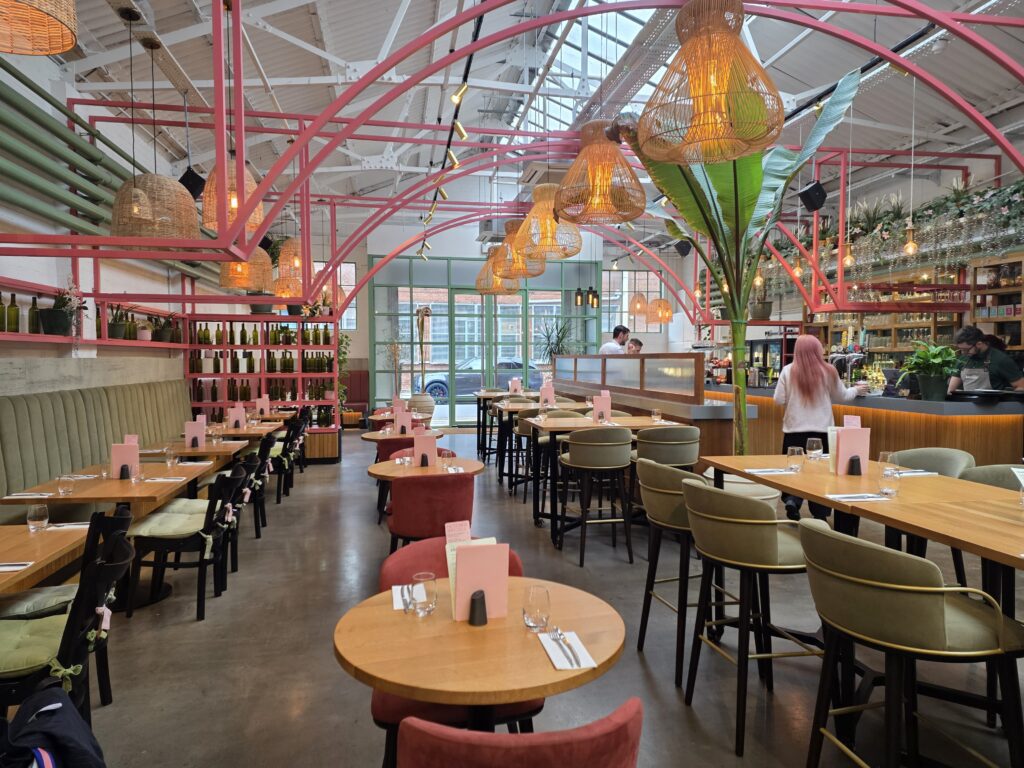
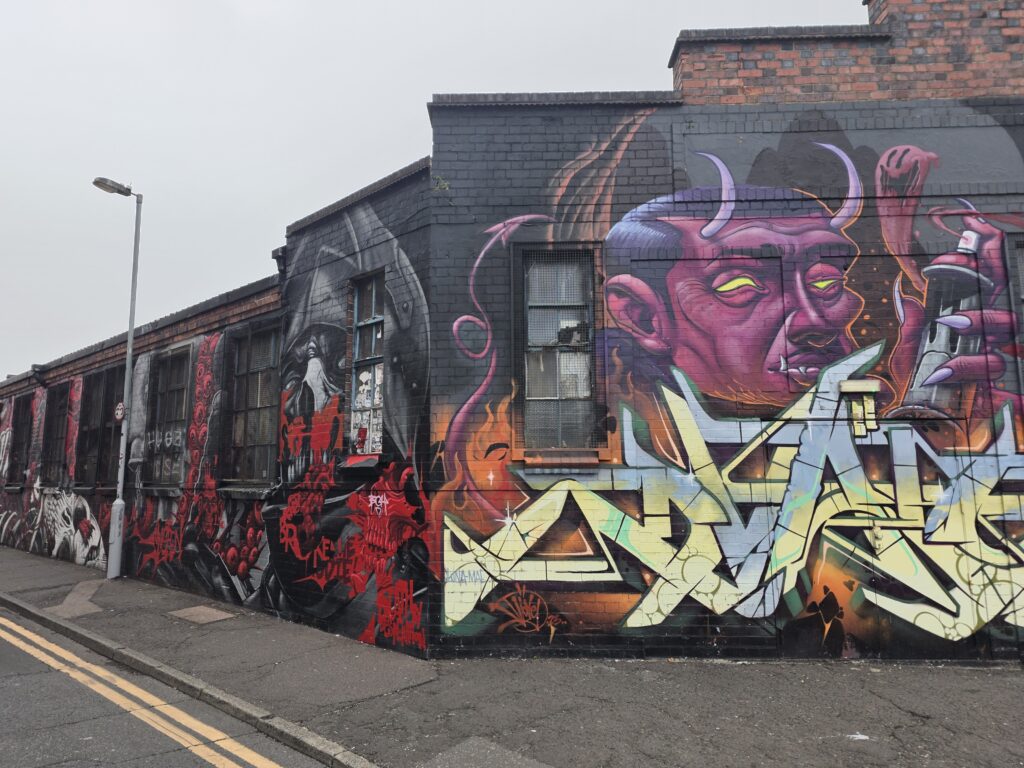
    I am just coming off a rejuvenating and rewarding time in the magical, revitalized industrial hub that is Birmingham, England. I was there for The Deceleration Assembly, the first ever (as far as I know!) gathering of practitioners working on endings and closures in civil society.

    After almost 2 whole years of doing this work full-time, it was amazing to be live and in-person with so many others who also tackle endings and think very deeply about how it could be done better. From the moment I walked into the pre-conference gathering, held at a lovely pizza place in central Birmingham, I knew I was with my people. Conversation flowed, pizza was nibbled, heads nodded, and lots of knowing laughter spilled out.

    The conference itself was held in the Old Library, a beautiful (if drafty), refurbished, old building that I imagine used to — per its name — be a library. After some brief icebreakers, we were joined by two marvelous speakers from the adjacent field of grief and funereal care. Then after lunch, we did smaller group sessions focused on themes and tools.

    My brain is still buzzing with what I heard and I am touched with how raw and honest the conversations were, even over some tricky social and cultural divides. However, I’ve boiled my thoughts down into 4 main takeaways:

    Community Building Matters

    I went into this event thinking that I wanted to maybe wind down the community of practice. The work is no longer being funded and sometimes it feels like there is only a trickle of engagement in the Slack or at the gatherings. However, the feeling I got from the assembly is that gathering is so very important, community is so important. People need a place for sharing resources, job opportunities, challenges, and even epiphanies with each other.

    The Decelerator folks have a large reach but I, sadly, don’t see them building community beyond this conference. How can we bridge the gap? I’m trying to nudge them a bit, but I am also open to what else can be done to meet the obvious need. I still do very much called to be a convener and connector in this space. Someone give me the money to keep doing it, please!

    “The feeling I got from the assembly is that gathering is so very important, community is so important. People need a place for sharing resources, job opportunities, challenges, and even epiphanies with each other.”

    Endings – Professional vs. Practice?

    I also came away wondering whether this needs to be consultant work. The lion’s share of the attendees were independent consultants (as am I) and I came away so curious how people were sustaining themselves and whether many of us were just competing over ever-shrinking pots of funding. I also wondered whether coming in as strangers for what should be deeply relational work was the way to approach this.

    Should endings, succession planning, transition management ultimately be skillsets and toolboxes held by operational leaders or should outside specialists be marched or is it a both/and? I fully recognize the valued of shaking up the energy by bringing in the occasional outside facilitator, but should the intimate work of closure be held by such an outside entity? I am not so sure.

    Thriving and Surviving while Ending

    This takeaway is, again, brought to you by my deep concern and suspicion of consultant work. I’m concerned about the sustainability of this work if the people doing it are not well taken care of. I’m feeling it deeply for myself right now, not only financially but also interpersonally. I’d love to have more vulnerable and brave conversations about mutual aid and community care. This can’t just be work people do because they have a spouse with a stable job or have otherwise lucked out financially. Too many valuable voices and talents will be left out if we stay such a narrow group.

    One of the things that struck me so deeply was when grief influencer Amber Jeffrey shared that she felt lonely in her work. This is also real. There is a conversation about coming and staying out of isolation when we are doing such tender work. I know The Decelerator has a supervisor to hold them through their challenges. We need to keep exploring such models.

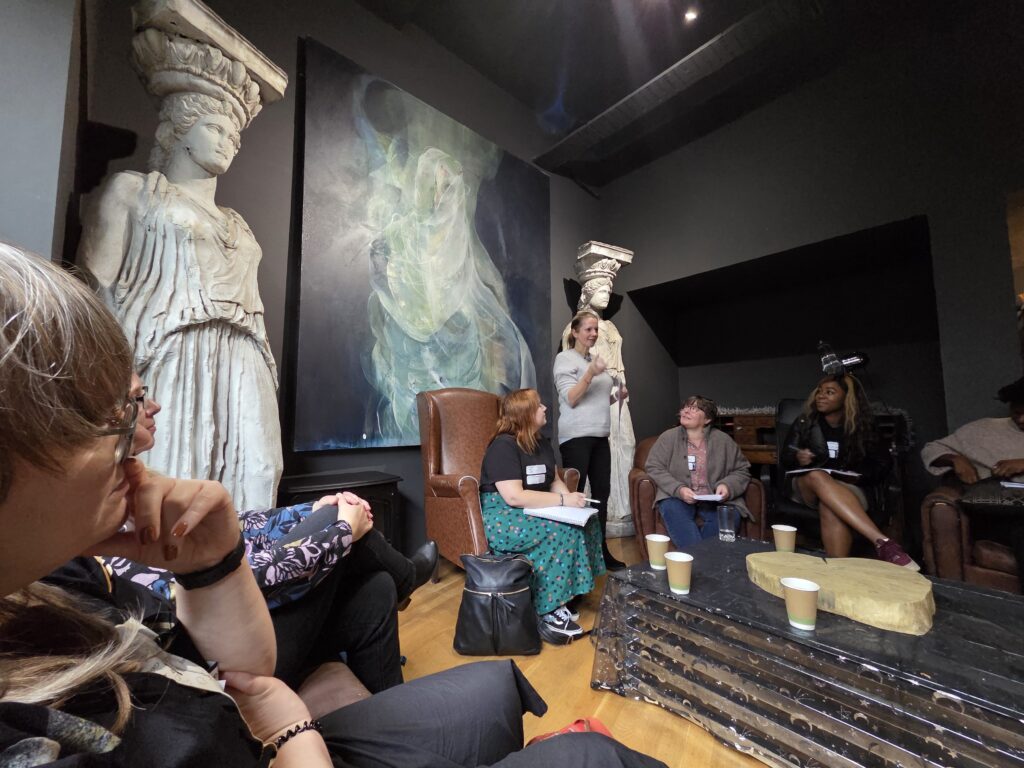
    Amber Jeffrey and Poppy Mardall sharing sage lessons from the grief and death care community
    Amber Jeffrey and Poppy Mardall sharing sage lessons from the grief and death care community

    Rooted in Faith, Spirituality, Culture

    My particular practice is rooted in my own spirituality, my cultural traditions, and other cultural traditions that I try to respectfully adapt to meet the needs of the communities I work with. I came away from the gathering interested in connecting with more people who are interested in or actively elevating the role of ritual in endings.

    Thanks again to The Decelerator Team for organizing a great assembly and big thanks to the city of Birmingham for being so dang charming. I am super smitten!

  • Me! In NonProfit Quarterly!

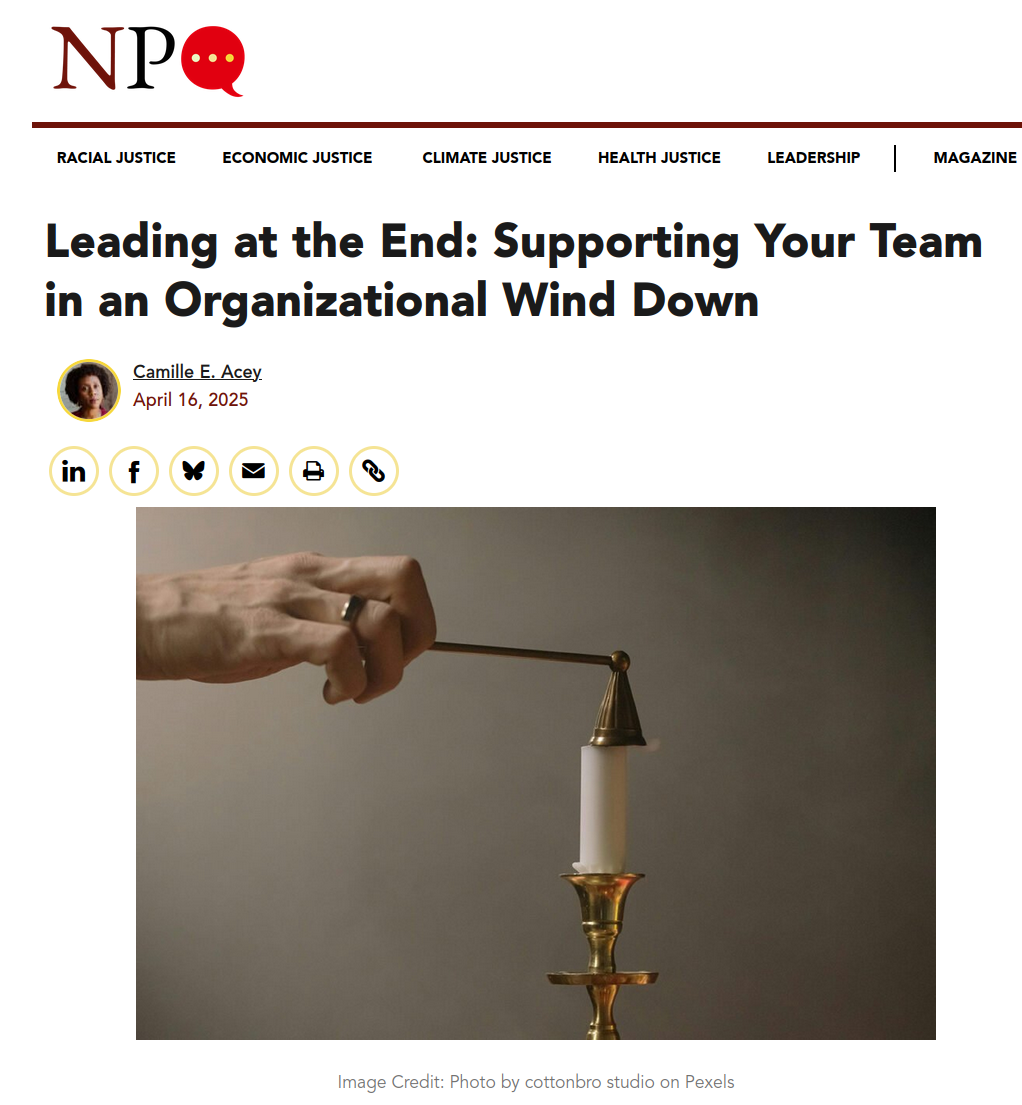
    I have long had ‘Publish a piece in NonProfit Quarterly’ on my bucket list. Even before I started The Wind Down, I felt myself drawn to this fantastic publication and the work of its many editors, and I wanted to be part of the conversation!

    So, it was a great honor when I was contacted by one of its editors — a lovely person, who I happened meet and work with over 25 years ago! — to say a few words about the art, science, and magick of closing things down.

    You can click here to read my article, and I thank you if you do. Lemme know what you think.

    Here’s to dreams coming true!