Category: the rest

  • Drip By Drip: A Recipe for Gradual Closure Communications

    A close-up shot of a water droplet hanging from a stainless steel faucet, highlighting surface tension.

    In some cases, closure comes at you fast. As I’ve covered in other articles, there are many reasons why an organization or project will close, and not all of them are related to factors that you can control.

    However, in many other cases, the writing is on the wall and on the screen…and on the faces of your donors and clients and political leaders, well in advance. In those sorts of cases, I encourage organizations to announce these things earlier. Like this week or today or right now. But In many cases, people are worried about crafting one perfect message that explains everything and perfectly encapsulates everything that has happened and everything you feel. .

    You do not have to do this. I spend a good amount of time looking at closure messaging (I even have a virtual museum where I collect them!), and I think there is a better way, folks. Rather than wracking your brain to formulate a message to encapsulate it all, here are some ideas for what you can do instead.

    1. Signpost Transition

    If you are blessed with time — and to my mind, this means anything more than 6 months — you can already start to signal transition. It is totally fine to telegraph that your organization is in a time of change. In fact, this particular sociopolitical moment has given you a perfect context and backdrop for no one on the planet to be surprised that you are taking stock of your situation. It doesn’t always spell certain doom.

    So using language like “time of transition”, “time of reflection”, or any of the kind of chrysalis/pause language that I’ve shared about in this post are a good starting point for signposting an impending Big Change. Make people aware via whatever communication channels are most appropriate for your group.

    2. Announce the decision

    Once you are fairly certain you are closing, you can announce that you have made that decision You do not have to provide any information about your timeline or plans at this point — you might not have those yet. Just let people know that the End Is Nigh!

    3. Share Details

    Once you’ve landed on an ending date and a timeline, share what feels appropriate. If certain resources or efforts will be wrapping up at certain times, give people a heads up so they can make other arrangements. If you have a partner or other recommended group that might be able to fill the gap, don’t hesitate to send people that way.

    I also love when organizations take us along on their closure journey and share the good, the bad, and the ugly. If you *can* do that, people (and by “people” I mostly mean me) will love you for it.

    4. Say goodbye

    Once you’ve done all the above and are ready to shut the doors, THIS is where you can drop your teary, goodbye letter. This is the place where you can thank God, your mama, and the Academy. This is where you can share your hopes and dreams for the future of your community and your field. This is also the time to tombstone your digital communications channels.

    ….And/but/also

    During the time that you are issuing all the above types of comms out to your people and the wider sector, you can — and should! — continue sharing out other updates to your community. If cool stuff is still happening, if certain staff members are transitioning out (or even in!) that is still worth sharing in the normal way you would. Just make sure that the language stays consistent and you don’t give anyone the sense that this somehow means you aren’t closing after all!

    Also, once you do the Last Goodbye, that should be it. No more announcements. That is it the end. Bravo! Take a bow. Curtain drop.
  • Careening Through Year Two

    My word, how is it 2026 already? It feels like just yesterday, I was a little babe in the woods pestering everyone I know about whether there was someone — anyone — out there thinking about how to do endings well in civil society. And here we are, two years into this project and every morning I wake up and the response keeps being, “The work is still on you, boo, it’s on YOU!”

    Fortunately this past year was another amazing one of continuing to find the scattered others out there who are working on wind downs, sharing about shutterings, and seeking out sponsors for sunsets. So I wanted to take a second to capture a brief rundown of The Wind Down’s second year of operations — the highlights, the low points, and what is on the horizon for this bright year 3 of its life.

    The Bright Spots

    The People

    As mentioned, I met so many fantastic people this last year. Between hosting the monthly community sessions and attending the fantastic Deceleration Assembly, I met and got to deepen relationships with so many fantastic people who incepted new ideas into my gray matter and pointed me in cool new directions or even just went along with me on wild goose chases and flights of fancy (I am looking at you, Tess!).

    Some of the folks I am most grateful for are all the fantastic folks in the Slack community, Jessica Meyerson at Educopia, Katya Fels Smyth (who fearlessly shuttered Full Frame Initiative this year), Naomi Hattaway, and the intrepid Kate Harris, Nonprofit Merger Mistress Supreme, who saw my museum and decided to close hers. If you’re looking at this and thinking I should have named you here…I did! It is in *invisible ink*. Yup.

    I am also grateful for the leaders who contacted the hotline or worked with me on longer engagements,shared so openly. and insisted that I (finally!) start charging for this work. I wasn’t sure when the time would be right, but folks just told me. They were like, “We are giving you money, and you can’t stop us.” Thank you for helping me put a dollar (or pound or euro!) amount on this work.

    The Places

    In 2025, I was able to take my work and ideas to the streets. In June, I was honored to sit on a panel for the great Women’s Leadership Council. In September, I facilitated a session at The Sidebar event that the Skoll Foundation supports on the sidelines of the United Nations General Assembly.

    Then in October, I hopped across the ocean to Birmingham, UK for The Deceleration Assembly hosted by our UK frenz at The Decelerator. I was stoked that my good (above-mentioned) pal Katya was there too. It was way too short but marvelous (my full review is here). I love being out and about amongst the people!

    The Things

    When I started working on The Wind Down, I jotted down a dream list of publications I would love to write for or be written about in: Stanford Social Innovation Review, Devex, and Nonprofit Quarterly. This year, I was in ALL THREE! What a thrill. I was even mentioned in Chronicle of Philanthropy. Look at me, ma, I;m in the papers!

    Last year, I invested in my tech stack, upping my game to use bespoke tools like Harvest (for invoicing and time tracking), Bigin (for tracking opportunities), and also moving over to Mailpoet for my newsletter. I also totally overhauled this here website. Hat tip to the great Joshua Christman for the website and the snazzy logo and the unwavering friendship and support (hire this man, y’all!)

    The Hard Knocks

    The Money

    This was probably one of the toughest years for me, financially. I just didn’t make much money on this and this was pretty much all I worked on last year. I had hoped my engagement with Joseph Rowntree Foundation would grow into something more fruitful, but they cut me and the Community of Practice project they were supporting off in February. It was a hard pill to swallow, but I soldiered on.

    Previous to this project, I spent more than a decade in tech where salaries and benefits and snacks (!) are a-flowin. The precarity in the social sector has been hard to wrap my mind around and I refuse to get used to it.However, I did have to accept it last year and do my best to live a full life on my savings and resourcefulness.

    The Supportive Community

    In 2024, the launch of TWD was coupled with the launch of another group called the IMMA Collective, an organization founded to give social impact solopreneurs a sense of community, support, and accountability. Being a part of IMMA gave me colleagues, cheerleaders, and people to share resources with and bounce ideas off of. Unfortunately, in April of 2025, I hit a wall with the group and couldn’t work things out. I stand by my decision to leave, but I also ache for the community I lost. I am a member of many groups, but none of them have (so far) filled the hole that IMMA left in my days and my heart.

    Hopes For Year Three

    I took my lumps this last year but also had some solid wins to build on. Moving into this new year, I am already entertaining some interesting opportunities.

    • Speaking – I have two speaking slots already, but I did have to turn another cool looking one down because they didn’t offer much in the way of travel support. Like I said, I love the peoples and the streets, so I will be out amongst them one way or another
    • Writing – I hope to post more here on this blog and also continue writing for civil society publications (and even publications not in this sector!). In a move that hearkens back to my punk rock youth, I am exploring doing some zines with a friend. I look forward to sharing those with you and leaving them at conferences and libraries and stuff!

      Hit me up if you wanna do in-person or virtual writing sessions. I need accountability partners!
    • Video – I started experimenting with video last year and still really believe the format has potential for spreading the word I am hoping to mess around with shorter form, especially if I can find some open source/non-algo-driven platforms to post them to.
    • Get paid or grow increasingly exasperated trying – Nothing more to really say here. I am gonna keep putting myself out there both for closures work and also non-closures paying work.

    What about you? How did it all turn out last year? What are you up to this year? I wanna know!

  • My Takeaways from The Deceleration Assembly

    The Deceleration Assembly

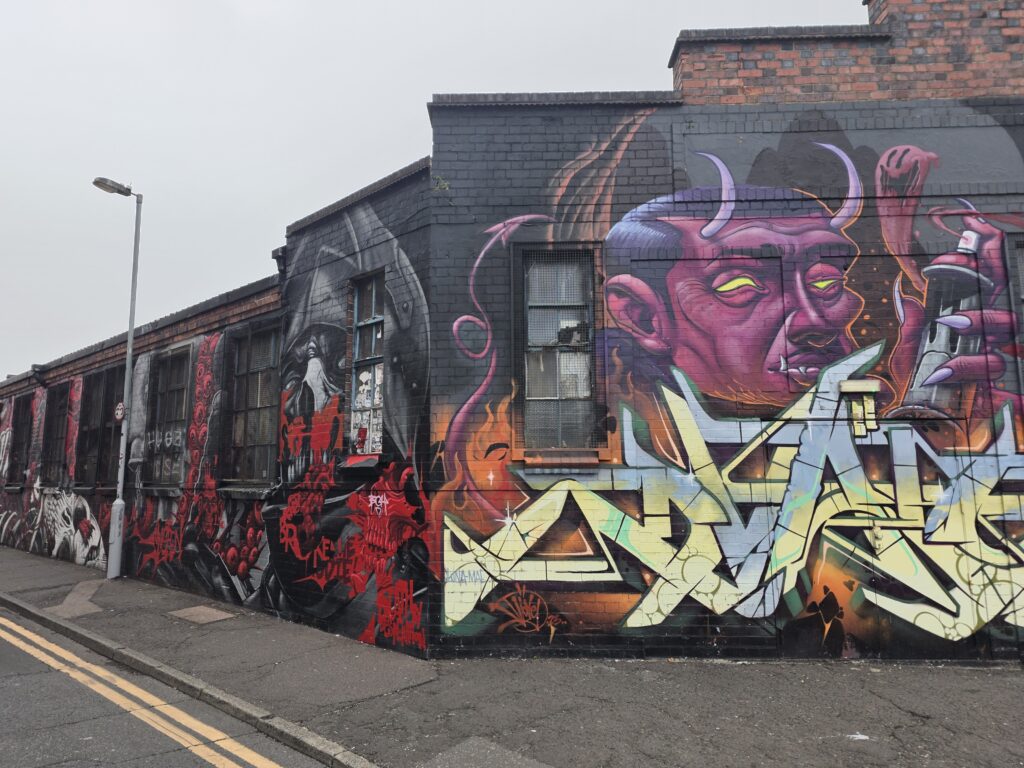
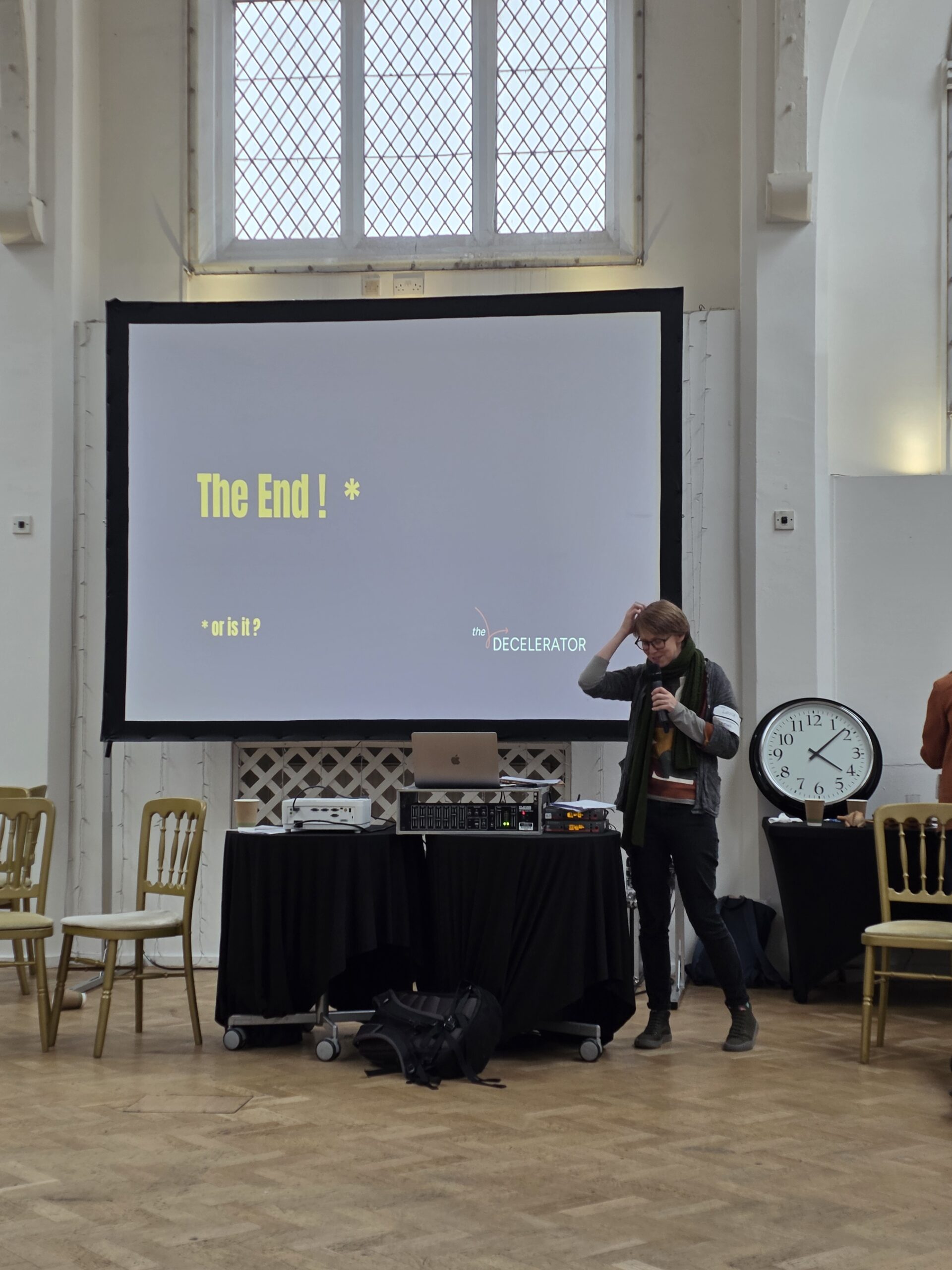
    I am just coming off a rejuvenating and rewarding time in the magical, revitalized industrial hub that is Birmingham, England. I was there for The Deceleration Assembly, the first ever (as far as I know!) gathering of practitioners working on endings and closures in civil society.

    After almost 2 whole years of doing this work full-time, it was amazing to be live and in-person with so many others who also tackle endings and think very deeply about how it could be done better. From the moment I walked into the pre-conference gathering, held at a lovely pizza place in central Birmingham, I knew I was with my people. Conversation flowed, pizza was nibbled, heads nodded, and lots of knowing laughter spilled out.

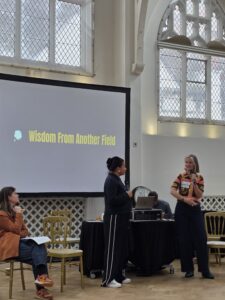
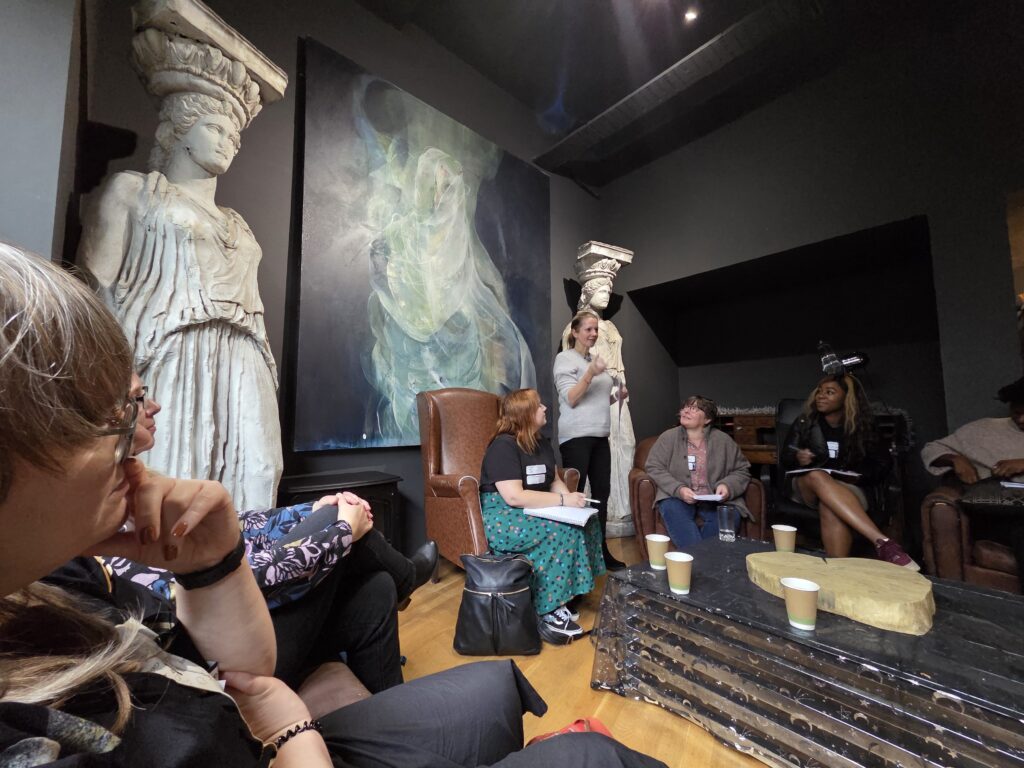
    The conference itself was held in the Old Library, a beautiful (if drafty), refurbished, old building that I imagine used to — per its name — be a library. After some brief icebreakers, we were joined by two marvelous speakers from the adjacent field of grief and funereal care. Then after lunch, we did smaller group sessions focused on themes and tools.

    My brain is still buzzing with what I heard and I am touched with how raw and honest the conversations were, even over some tricky social and cultural divides. However, I’ve boiled my thoughts down into 4 main takeaways:

    Community Building Matters

    I went into this event thinking that I wanted to maybe wind down the community of practice. The work is no longer being funded and sometimes it feels like there is only a trickle of engagement in the Slack or at the gatherings. However, the feeling I got from the assembly is that gathering is so very important, community is so important. People need a place for sharing resources, job opportunities, challenges, and even epiphanies with each other.

    The Decelerator folks have a large reach but I, sadly, don’t see them building community beyond this conference. How can we bridge the gap? I’m trying to nudge them a bit, but I am also open to what else can be done to meet the obvious need. I still do very much called to be a convener and connector in this space. Someone give me the money to keep doing it, please!

    “The feeling I got from the assembly is that gathering is so very important, community is so important. People need a place for sharing resources, job opportunities, challenges, and even epiphanies with each other.”

    Endings – Professional vs. Practice?

    I also came away wondering whether this needs to be consultant work. The lion’s share of the attendees were independent consultants (as am I) and I came away so curious how people were sustaining themselves and whether many of us were just competing over ever-shrinking pots of funding. I also wondered whether coming in as strangers for what should be deeply relational work was the way to approach this.

    Should endings, succession planning, transition management ultimately be skillsets and toolboxes held by operational leaders or should outside specialists be marched or is it a both/and? I fully recognize the valued of shaking up the energy by bringing in the occasional outside facilitator, but should the intimate work of closure be held by such an outside entity? I am not so sure.

    Thriving and Surviving while Ending

    This takeaway is, again, brought to you by my deep concern and suspicion of consultant work. I’m concerned about the sustainability of this work if the people doing it are not well taken care of. I’m feeling it deeply for myself right now, not only financially but also interpersonally. I’d love to have more vulnerable and brave conversations about mutual aid and community care. This can’t just be work people do because they have a spouse with a stable job or have otherwise lucked out financially. Too many valuable voices and talents will be left out if we stay such a narrow group.

    One of the things that struck me so deeply was when grief influencer Amber Jeffrey shared that she felt lonely in her work. This is also real. There is a conversation about coming and staying out of isolation when we are doing such tender work. I know The Decelerator has a supervisor to hold them through their challenges. We need to keep exploring such models.

    Amber Jeffrey and Poppy Mardall sharing sage lessons from the grief and death care community
    Amber Jeffrey and Poppy Mardall sharing sage lessons from the grief and death care community

    Rooted in Faith, Spirituality, Culture

    My particular practice is rooted in my own spirituality, my cultural traditions, and other cultural traditions that I try to respectfully adapt to meet the needs of the communities I work with. I came away from the gathering interested in connecting with more people who are interested in or actively elevating the role of ritual in endings.

    Thanks again to The Decelerator Team for organizing a great assembly and big thanks to the city of Birmingham for being so dang charming. I am super smitten!

  • Tending to Endings at Practices for Composting and Hospicing

    Since April 2024, I have been the facilitator of the Practices of Composting and Hospicing community. Next month, we will be joined by the team behind the Tending To Endings card deck, a tool to help groups and individuals design and have better endings. The cards are inspired by concepts from nature and are absolutely beautiful and inspired.

    Curious?

    Join us!

  • How You Made Them Feel OR “Cruelty Over Care In Closure”

    These past few weeks have been rife with the abrupt shuttering of government programs, firings of thousands of government and nonprofit employees, and the long tail. knock-on effect on everyone from aid program employees to dock workers and rural farmers. The topic of endings has been front of mind across the globe, so people have been reaching out to basically say, “Wow, everything is closing! This must be your moment!”

    It is so very much NOT my moment.

    This is basically everything I don’t ever want to see happen. Cruel, callous ejections of people that THE WORLD STILL NEEDS — all while we have more than enough money to keep them working — is nothing like what I prescribe or want to occur.

    Now, don’t get me wrong. I am a person who stands very far to the left — miles away from the left of the left of congressional chambers, and no great fan of the state or representative of representative democracies. But you know what I detest more than any of that? EVIL. My opposition to humans bringing misery to other humans or the planet solely for their financial and political gain (or because they think it is a fun game!) is at the heart of my political convictions and also at the heart of the work I am continuing to develop here at The Wind Down.

    In a previous post, I wrote about what is lost when things close down poorly. Just to recap, that list includes:

    • knowledge loss
    • breakdown of relationships – external and internal
    • reputational damage
    • leaving a service vacuum
    • loss of breadcrumbs/traceability back to the work you did and the people that did it.

    In yet another post, I also wrote about reasons why projects and organizations close. Having to close suddenly usually happens when an organization suddenly runs out of money, finds itself in a dangerous situation such as an actual warzone, or when the/their work finds itself in say a hailstorm of controversy. While the institutions are under attack, I’d say it’s not quite the same as a warzone situation. An artificial warzone has been created, which, ironically, is now endangering the lives and well-being of many people in actual zones of war, disease, and famine and likely contributing to their increase.

    Needless to say, these closures represent the kind that are not prominent on my BINGO card. It is just about the nightmare scenario of total failure and loss, and the consequences are likely to reverberate for years — if not decades — to come.

    “I’ve learned that people will forget what you said, people will forget what you did, but people will never forget how you made them feel.” – Maya Angelou

    So what do I recommend when you are in the absolute worst case closure?

    Well, first of all, let me say that I am IN NO WAY implying that the people in this situation have any responsibility to do anything more, this is just if people are at loose ends and want to explore how to maybe make a splash of lemonade out of lemons. Feel free to do nothing but plot revenge, if you wish. Lord knows these devils deserve it. But for anyone who wants to continue on with me and this thought experiment. Here are a few ideas*:

    SCENARIO 1: THINGS ARE BAD, BUT YOU STILL HAVE YOUR JOB.

    If you can, back up contacts, important (non-proprietary) documents, and start taking some of your desk stuff (if you work onsite) home. Also, I know a lot of people end up using the work computer as the personal computer, but if they demand you give it back you will lose a lot. So, look into getting your own device or backing up bookmarks and whatever else you need to the cloud. Get phone numbers of some of your co-workers and give them yours.

    Ask around for names of labor lawyers now just in case. If you can get a free consult just so you know your rights, take it!

    SCENARIO 2: THINGS ARE BAD, AND YOU’VE BEEN TOLD YOU MAY SOON BE LET GO.

    See above and do everything listed there. Take home EVERYTHING (if you work onsite). Wipe your computer of anything personal NOW.

    SCENARIO 3: YOU’VE BEEN LET GO BUT THE ORGANIZATION IS STILL OPEN

    If you weren’t able to get your physical things, first try to reach out officially to see if they can put your things in the mail. It sucks because they may miss stuff, but it can be better than nothing. If they refuse, you can see about getting a lawyer to write an official letter. If you can, hold off on signing your separation paperwork until you got your property returned.

    As for documents, you might try reaching out to a trusted co-worker via phone, email, or LinkedIn. DO NOT write them on work email. You might jeopardize their job and make things worse for both of you. If that person can safelyget documents to you, they should download and send via a non-email address. Sharing via GDRive or some other work system is NOT THE MOVE.


    SCENARIO 4: YOU’VE BEEN LET GO, EVERYONE WAS LET GO, AND THE WHOLE ORG IS CLOSED.

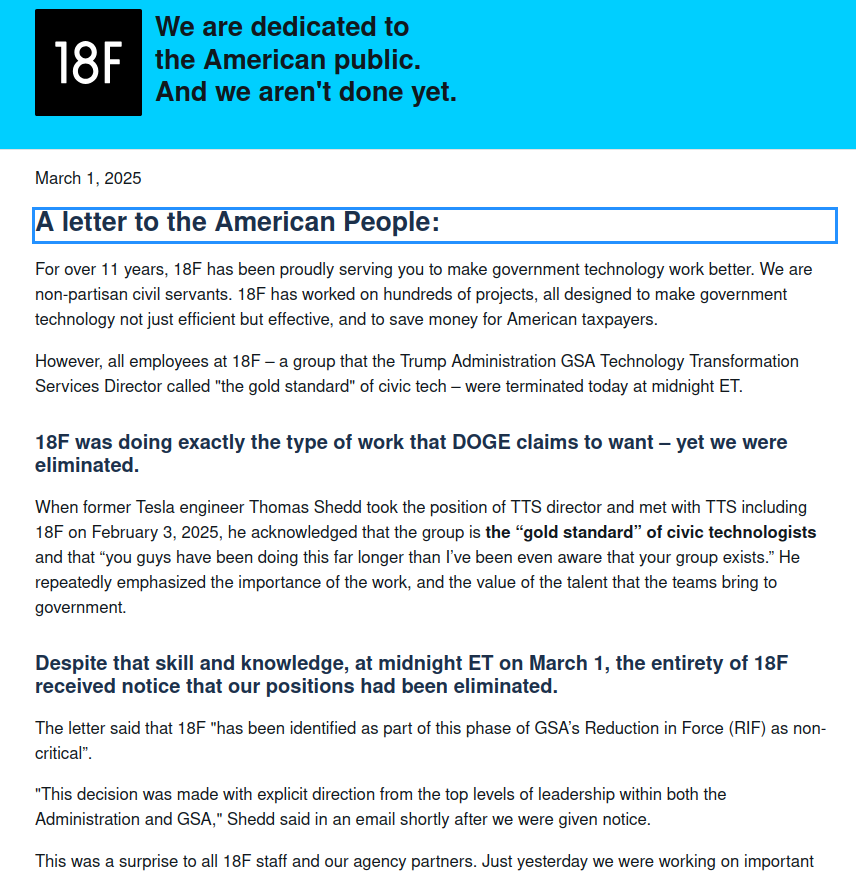
    Find the others and get creative. If there is legal action you can take, take it! I particularly love that the former employees of (now-shuttered) 18F swarmed on a website the day they were fired and had it stood up in under 4 hours.

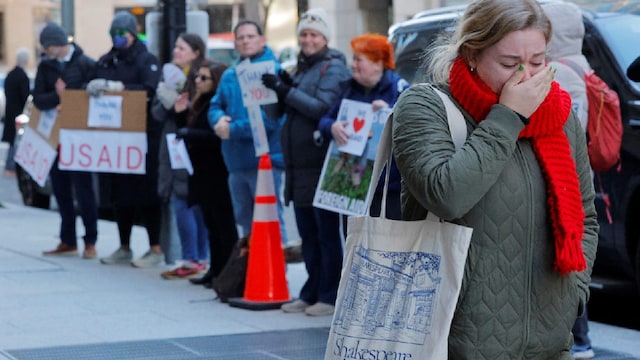
    The other day, I attended a really beautiful, early morning, grief circle hosted by Fearless Project for people that worked with and through USAID. It was valuable for people to just see each other and not feel alone. I heard so much confusion, loss, fear, grief, love, and resilience. People are disappointed and heartbroken, but no one was talking about giving up or going corporate. However, I was moved by how much they still wanna find a way to do the do-goodery stuff that drew them to charity and public service.

    The new 18F website created by former staffers

    What did I miss? What have you seen that has been effective in salvaging a bad ending?? Lemme know in the comments!!

    *GIANT DISCLAIMER: I am not a lawyer. None of this is legal advice. I HIGHLY recommend you get a lawyer if you are in a bad situation in any organization. Lawyers have saved my professional bacon many times, and I can’t suggest enough that you work with them when things get (or even feel!) bad.