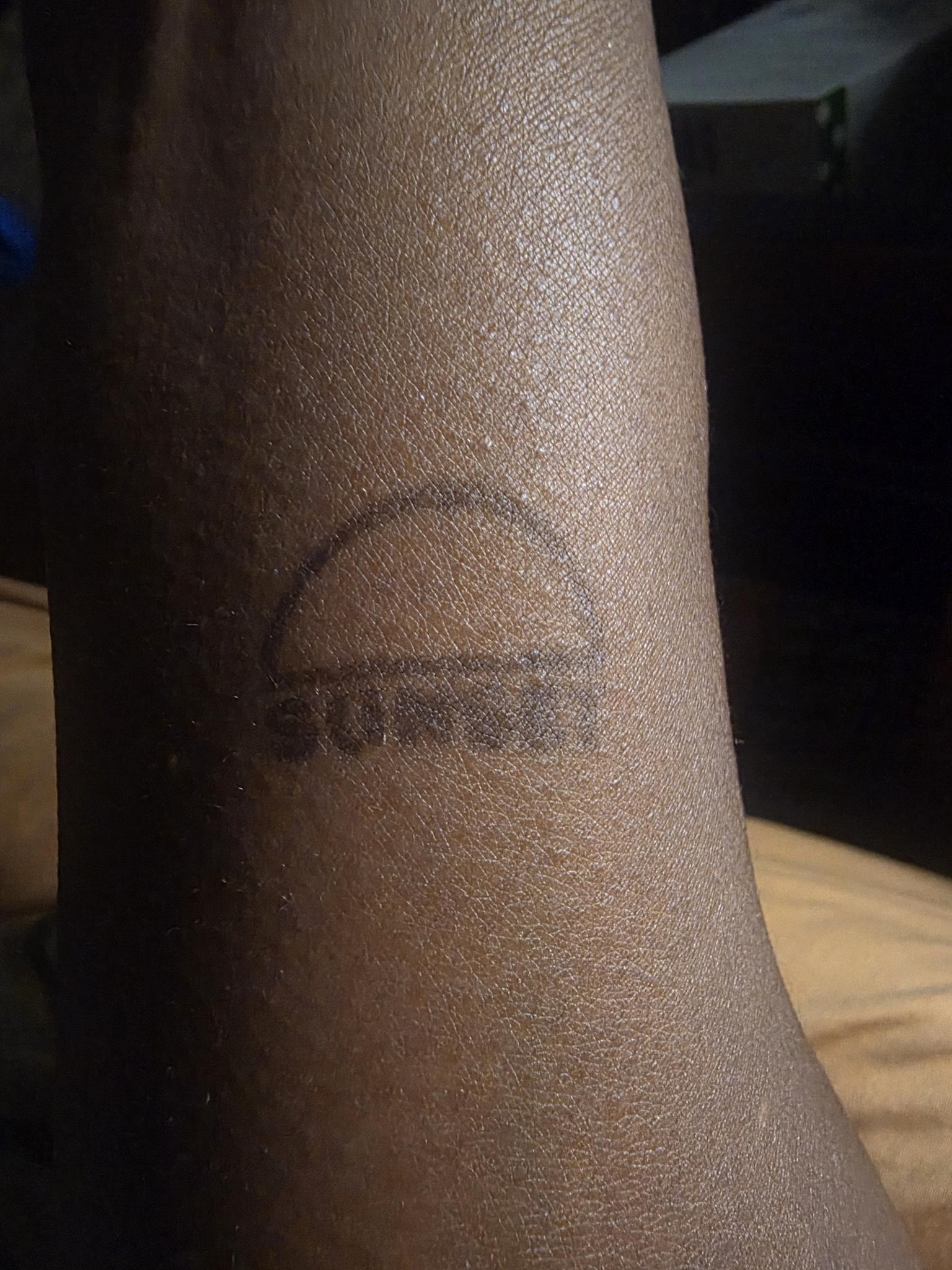
The other day I went into the city to attend a day party memorializing the life of a beloved member of NYCs house music and ballroom communities. As I entered the venue, the organizer stamped the inside of my wrist (a practice that is customary at nightclubs. The stamp allows you to exit the club and return later without having to rejoin the line). It was a hot day and the club was muggy (it has a heated pool next to the dancefloor!), so when I departed I wasn’t coming back!
It wasn’t until I was on the subway ride home that I bothered to look at the stamp on my arm: it was a setting sun with the word SUNSET beneath it. It might be the stamp they always use there, but that afternoon it was a beautiful and subtle reminder that we all go.
Where have you seen or been given subtle reminders of inevitable endings in your work and life? How can we stamp SUNSET in more places?
Here are the links!
1) San Francisco pulls the plug on criminal justice partner
In 1964, The Own Recognizance (O.R.) Project emerged as a project of the San Francisco Bar Association to support local people who were arrested and could not afford to pay bail. In the early 2000s, the San Francisco Pretrial Diversion Project (SF Pretrial) arose as a standalone organization to continue carrying this work forward. The group not only helped ensure that roughly 1,800 defendants on its caseload made their court dates, but also got people social services like medication and housing that helped fight recidivism.
For the past year, nonprofit SF Pretrial has been fighting for its life after the city’s Superior Court’s leadership pushed to end their contract following a financial mismanagement scandal. SF Pretrial reportedly worked hard to rectify those problems, but it was not enough to salvage the relationship and keep the group up and running. The city insists the work can be handled by its own Adult Probation department. However, SF Pretrial’s board — whose members include a former SFPD chief and a former district attorney — has warned that a law enforcement agency tasked with tracking people who have not been convicted of any crime is problematic, and that transition (which already is missing its self-imposed transition timelines!) could create chaos in criminal courts already plagued by backlogs and lawyer shortages.
2) Mother’s labor of love homeless group forced to shut down after lease loss
Named after the founder’s late son Brian, who also experienced homelessness, Connecticut group Brian’s Angels provides unhoused people with survival items such as toiletries, nonperishable foods and clothing. The organization also offers a temporary shelter, as well as employment and banking support. Since the COVID pandemic in 2020, the center has also provided daily hot meal and bagged food.
After 11 years of using Prospect United Methodist Church, the church shocked the group when they suddenly decided not to renew the lease. Despite an outcry from the volunteers and community, the city of Bristol and the church did not relent, Instead, the the mayor insisted that the city already had a robust social safety net and that she was certain the gap could be filled by other social service orgs in the area.
3) San Francisco nonprofit photo gallery out of shots
After 52 years, SF Camerawork has shuttered (no pun intended this time). The nonprofit arts space was dedicated to contemporary photography served the Bay Area’s photographic community through exhibitions, publications, critique sessions and events.
The group cited widespread causes rising operating costs, declining public funding and changes to the “philanthropic landscape” — causes that have sadly lead to the demise of many other San Francisco cultural centers in the past year.
4) Northwestern Program of African Studies to end its near eight-decade chapter in higher education
Founded in 1948 by American anthropologist Melville J. Herskovits, the program was the first formal academic program focused on Africa and its study in the United States. Staff were not informed as to why the program was being sunsetted, nor what will be the future of Africa scholarship at the university.
I’m feeling a bit tender about this once. Northwestern was the first (maybe only?) university to offer a full correspondence course (with a whole set of cassette tapes I came across as a kid!) of my mother’s native language.
5) Closing Federal Prisons: A Winning Hand
6) How to Exit to Community: A Cookbook for Blockchain communities
Kudos to the BlockchainGov team for the launch of this handy (and FREE!) resource, which is a value little book for people in any and all sort of project communities. Don’t get it twisted; I DO NOT care about blockchain. Nuh uh.
7) Pace of college closings picks up, with more projected
“More than 440 of the nation’s private, nonprofit four-year colleges and universities are now at risk. Fewer than half of students at colleges that close continue their educations..of those who do, only half go on to earn degrees. Some 670,000 students are enrolled at those (at-risk) colleges and universities…”
A perfect storm of declining birthrates, a reduction in international students due to attacks on immigration, political pressure, and a drop in overall in-person college attendance have resulted in a preciptious drop in college enrollment and a surge in closing campuses. This article in Hechinger Report covers what is happening, the ways states are responding, and how some creative people are cashing in.
8) Is the future of philanthropy impermanence? (video)
This is a great discussion between Glenn Galaich of the (spending out) Stupski Foundation alongside Santosh Ramdoss of the (also spending out) Gary Foundation.
Yours in the end,
Camille
P.S. Rest In Power, Ren!
Leave a Reply