
Vladimir Ilyich Lenin is credited to have once said something along the lines of, ‘”There are decades where nothing happens and weeks where decades happen.”
If that doesn’t resonate with you right now, you aren’t paying attention (and I might be interested in blissfully sailing out to whatever island you are hiding out on). But if you are here and reading, your eyes are probably open and you are WIDE AWAKE and get it. Sometimes life and/or world events come at you fast. When you are lucky or prescient you are ready for it and nimble like a cat. However, other times you are comfortably working away and totally blindsided.
While none of us can be omniscient, once you’ve lived a bit, it becomes clear that the only constant is change. Why then do we so often build organizations that seem to forget or ignore that? Part of what animates me here at The Wind Down is trying to get across the message that longevity and stability does not always correlate with impact.Sometimes we do need institutions that are strong like oaks, but other times we need structures that flow like water. How can our sturdy structures sustain during those “nothing decades” even as they help us stay alive to those weeks when decades bear down on us? My inbox is open if you’ve got the answer!
In the meantime, here are the links:
1) Michigan hunting and fishing group succumbs to the forces
Just shy of its 90-year anniversary, Michigan United Conservation Clubs has announced they will be closing after failing to secure the full $100,000 it required for basic operating funds. For nearly 100 years, MUCC worked to defend hunting, fishing, trapping and conservation in the state. It consisted of individual members and affiliated clubs that paid dues to fund its work.According to its leadership, their shuttering will leave a void in the state’s conservation space.
2) Rural Catholic college gives up the ghost
Since 1946, Anna Maria College has provided a Catholic-centered education to undergrads and graduate students. While it initially opened as a women’s college, in 1973 it went co-ed. The school was best known for having the largest fire science program in the Northeastern area of the United States.
However, the school’s mounting debt forced the Massachusetts Department of Higher Education to step in and push for the wind down.
3) Canadian dairy cooperative dealt closure blow
After being told that the plant was to be expanded, the 90+ employees of New Brunswick’s Agropur dairy plant along with the wider community are reeling at the news that their plant is scheduled to be shut down by 2028. According to reports, the end of this plant will affect not only the workers but the ability of New Brunswick to maintain its food security and independence.
4) Doors (temporarily) swing shut at museum memorializing “Scotland’s Alcatraz”
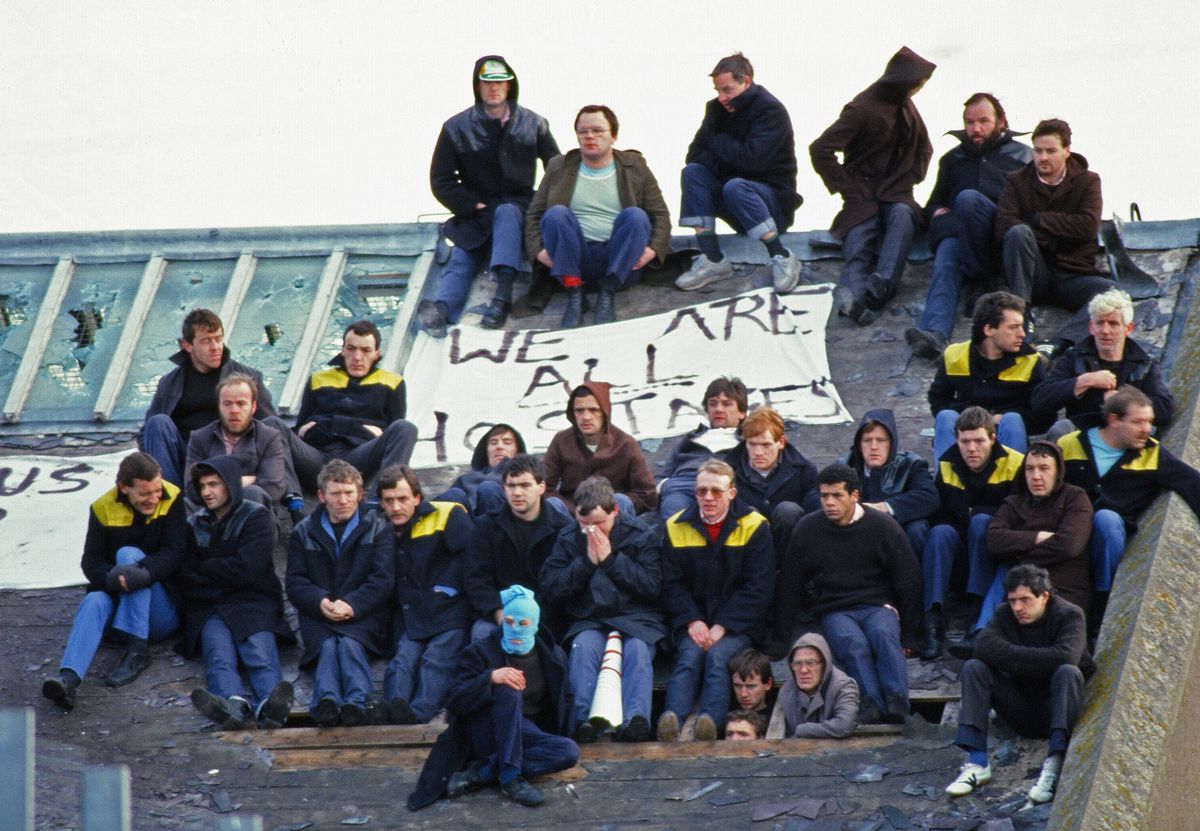
From 1883 to 2013, Peterhead Prison incarcerated thousands, and was also the site of several notable prison rebellions. Once decommissioned, it re-opened as a tourist attraction. However, new owners Cove Attractions have struggled to make it a big draw, so they are hitting pause to add more to the offering. They plan to open up more areas of the facility to the viewing public and also — because I guess they think it’s not in poor taste — an escape room option. Siiiiigh.
5) Hampshire College and the Death of a Boomer Utopia
“…In this unsettled moment, it makes sense that a place like Hampshire lost its relevance. And yet we might need its kind of unruly thinking now more than ever.”
A NY Mag writer pays tribute to their alma mater and muses on what the closure of the very liberal liberal arts college (also based in Massachusetts) might portend for our society.
6) “Nobody Told Me That Leaving Would Feel Like This“
“…in this sector, organizational failure and personal failure have become the same thing. When the organization struggles, we struggle. When it stumbles, we stumble. So we do what people do when their identity is on the line? We hold on. We fight. We downsize to a point of almost comedic inefficiency, keeping the lights on with a skeleton crew and a wing and a prayer, because closing means something we cannot stomach. It means we failed. Not the model, not the funding landscape, not the political conditions. Us. Closing gets read as a character flaw, a confession, proof that we were not enough. And so we choose almost anything, almost anything at all, rather than let it end.”
Dr. Shawn Ginwright is a healing-centered leadership expert. In this piece, he shares how he is working with an ever-increasing number of impact leaders grappling with closures. If anyone needs to hear this today, let me be the first to say: you have done enough, and you are enough. Get some rest.
UPCOMING EVENTS
Leave a Reply